
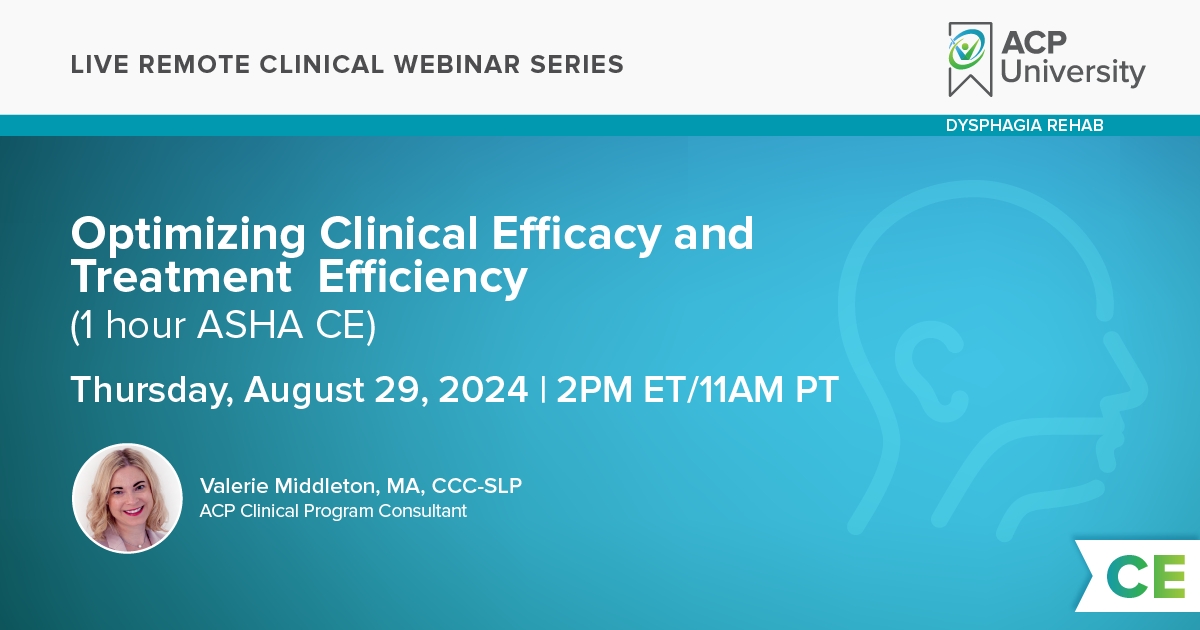
Optimizing Clinical Efficacy and Treatment Efficiency
Date and Time
Location
Virtual Event
About this course:
This one-hour intermediate level course for PT, OT, and SLP provides instruction on the evidence regarding the clinical benefits of Group and Concurrent Therapy modes, the definition of groups, and the regulatory requirements set forth by the Centers for Medicare and Medicaid Services regarding the coverage of Medicare beneficiaries. This course is a part of a series of Accelerated Clinical Practice courses. This course provides the individual attention necessary for clinicians to understand how to conduct Group Therapy sessions to benefit patients treated in this format.
Instructor:

Enroll Now
Please note: You will not be able to register for webinars without an active
ACP University (LMS) account.
Existing Account
Auto-Enrollment
For the best experience, download the Adobe Learning Manager App and use the below QR code to automatically enroll anytime leading up to the start of the course.

Existing Account Enrollment Request
If you already have an account but can’t scan the QR code,
complete our form and we will add you to the course.
Requests must be received 24 hours prior to the course’s scheduled start.
ACP University Account Request
An active ACP University (LMS) account is required to register for this course. If you don’t have an account, please reach out to your Clinical Program Consultant for your facility-specific learner link. If you don’t recall who your CPC is, reach out to us at [email protected].
Related Events
October 27, 2026
Frailty Series - Frailty Overview
Frailty is a geriatric syndrome which leads to increased vulnerability to stressors, affects overall health and quality of life, and limits functional mobility and ADL/IADL. Clinical Practice Guidelines recommend interdisciplinary team management to prevent or reverse frailty. Incorporating frailty interventions and leveraging existing evidence-based strategies will facilitate optimal outcomes for residents with frailty. This course provides a review of frailty definitions, risk factors, pathophysiology, screening and assessment tools, and emphasizes the relationship between frailty and other geriatric syndromes and chronic diseases.
October 29, 2026
Pain Management after Limb Amputation
This one hour CE course is intended to provide clinicians with the most current in-depth information about pain management after limb amputation. The lecture will reinforce concepts and information related to the prevalence of amputation, importance of collaborative care, physiology and characteristics of pain including types of pain following amputation and treatment options. The course content and clinical protocols are evidence-based and oriented to immediate clinical applications impacting patient activity performance and participation in mobility and social roles.