Neuro Rehab Task Analysis
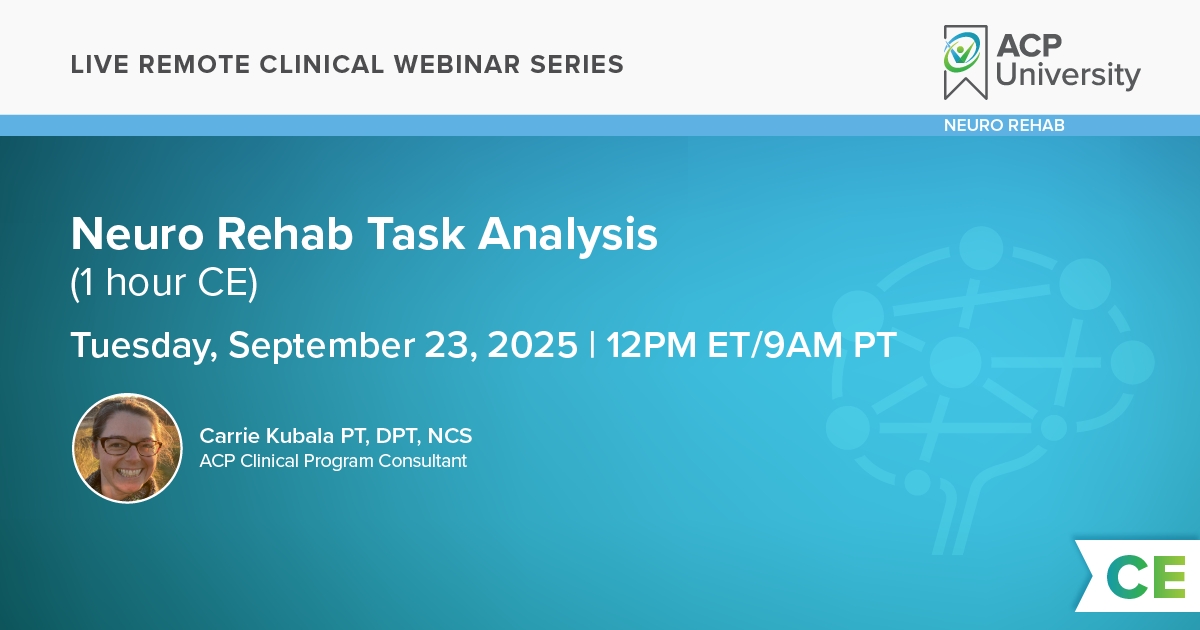
Date and Time
Location
Virtual Event
Enroll Now
Self-Enrollment for Existing ACPU Account Members
For the best experience, download the Adobe Learning Manager App and use the below QR code or direct URL to automatically enroll anytime leading up to the start of the course.

If you don’t have an ACPU account, please reach out to your Clinical Program Consultant for your facility-specific learner link. If you don’t recall who your CPC is, reach out to us at [email protected].
About this course:
This one-hour intermediate level course for PT/PTAs and OT/OTAs is part of a series of Accelerated Clinical Practice courses. Neurological disorders increase with age and are the leading cause of disability across the world. The WHO International Classification of Functioning, Disability and Health (ICF) can be used as a framework for the neurorehabilitation process to facilitate assessment, set goals, and select appropriate outcome measures and interventions. This course reviews the ICF model, with a focus on the qualitative measure of movement/task analysis for neurological conditions in order to support comprehensive assessment of activities of daily living (ADLs) and function. Several core tasks will be discussed, emphasizing analysis of observable constructs and application of task and environmental variations. The course includes a case study incorporating task analysis to reinforce the course content and support the therapist’s critical thinking.
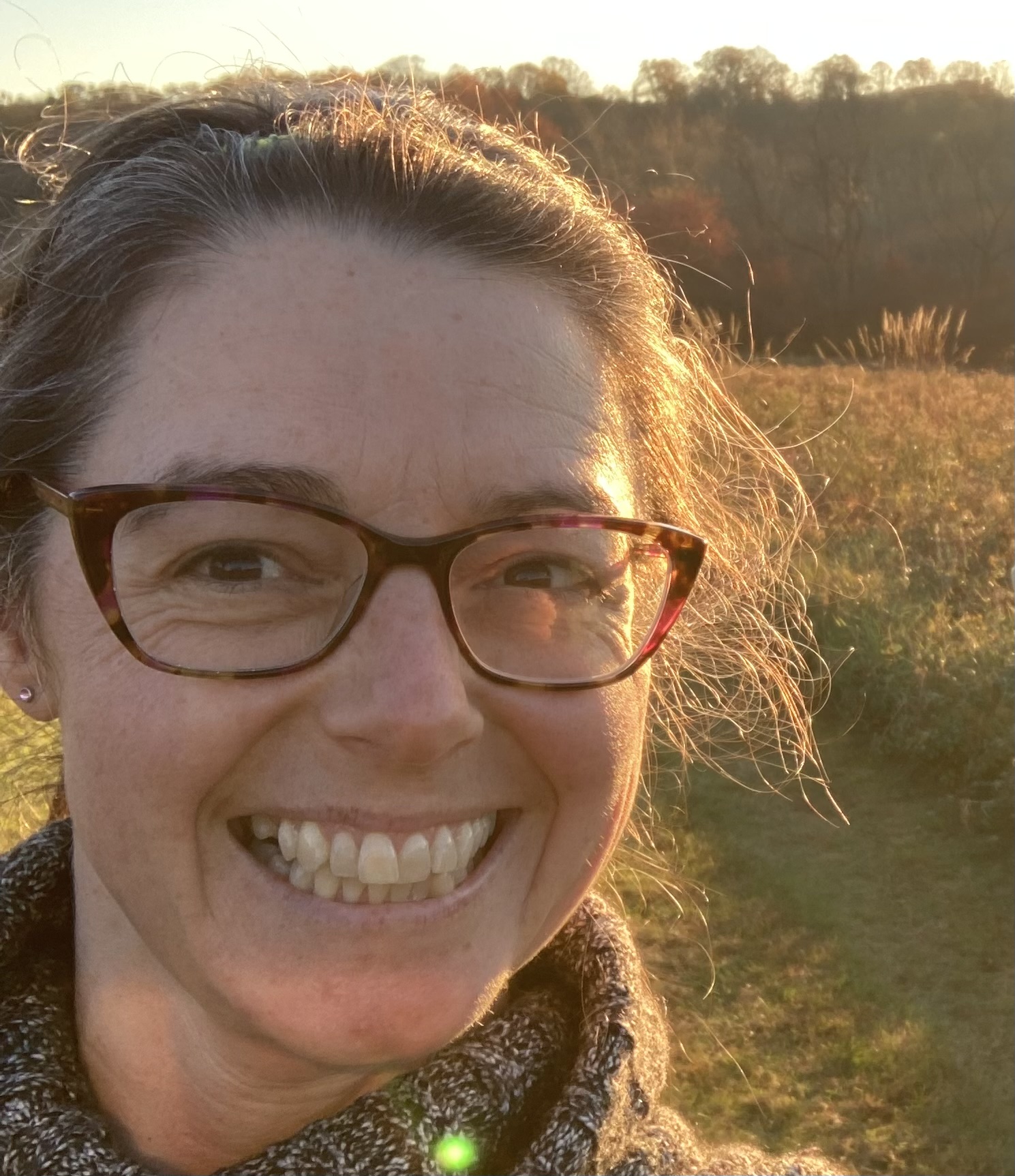
Instructor:
Request Enrollment by ACP
If you are unable to use the link/QR code above to register, please submit the form below to request enrollment. You may also use this form to enroll in multiple courses for september 2025. Requests must be received 24 hours prior to the course’s scheduled start.
Related Events
September 29, 2026
Electrode Application and Safety
This intermediate level course for PT/PTAs and OT/OTAs on Electrode Application and Safety is part of a series of Accelerated Clinical Practice courses. Through a combination of lecture and lab demonstrations, this course provides the individual attention necessary to achieve proficiency in the use and safe application of electrodes for pain management and neuromuscular electrical stimulation
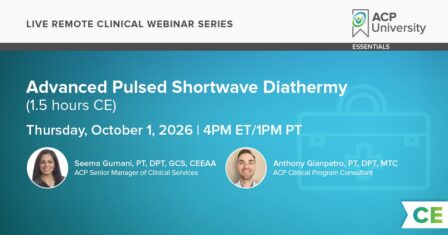
October 1, 2026
Advanced Pulsed Shortwave Diathermy
This 1.5 hour course provides clinicians with in-depth information on pulsed shortwave diathermy and clinical applications. It reviews electromagnetic energy, mechanisms of action, and evidence-based research for common patient conditions. The case studies lab provides active engagement to reinforce concepts and techniques using pulsed shortwave diathermy for evidence-based indications across the healthcare continuum.