Tag: SNF

Respiratory Therapy in Skilled Nursing: Opportunity, Exposure, and the Case for Standardized Training

Respiratory Therapy in Skilled Nursing: Opportunity, Exposure, and the Case for Standardized Training

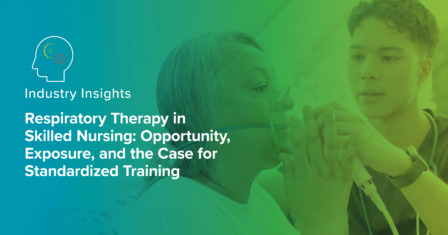
Respiratory therapy has become one of the most consequential clinical and financial pressure points in skilled nursing today. For providers operating under PDPM, it represents a genuine opportunity to capture reimbursement that reflects the true complexity of the patients they serve. It also represents one of the fastest-growing areas of audit exposure in the industry.

Getting it right requires more than good intentions. It requires trained staff, standardized processes, and documentation that withstands scrutiny.

The Opportunity

Respiratory conditions sit at the intersection of diagnoses most likely to drive skilled nursing admissions. Chronic Obstructive Pulmonary Disease (COPD), and other pulmonary conditions are associated with high hospitalization rates, elevated nursing intensity, and significant non-ancillary costs—all of which factor into PDPM reimbursement.

Industry experts estimate that up to 50% of today’s nursing home patients may genuinely meet the threshold for a Respiratory Special Care High designation. Even a routine daily nebulizer treatment averages 17 minutes to administer, not including assessment, monitoring, and cleanup.

The Exposure is Growing

According to Alicia Cantinieri, Managing Director at Zimmet Healthcare Services Group, the Respiratory Special Care High designation has been identified as a key driver of audit findings and denials, not because care isn’t being delivered, but because providers frequently fail to capture required indicators or maintain documentation needed to support their claims. As more states convert Medicaid case mix systems to PDPM-aligned models, that risk is expanding. Auditors expect specific physician orders detailing modality, frequency, duration, and scope. They look for evaluations conducted by qualified personnel with verifiable credentials and training to match. Gaps in any of these areas don’t just create compliance risk. They leave reimbursement on the table.

What Strong Respiratory Programs Have in Common

Providers who successfully capture the clinical and reimbursement value of respiratory care share a few things in common: standardized risk assessment built into the care process, staff trained to use a consistent definition of skilled care need, a clear escalation pathway for patients whose conditions change, and documented staff credentials that support audit defense.

The Role of Education and Credentialing

This is where training becomes a strategic priority, not just a compliance requirement. Staff who understand respiratory assessment, intervention, and documentation don’t just reduce audit risk; they deliver better care. When that training is credentialed by a recognized authority, it carries weight with auditors and administrators alike. Two ACP courses approved by the American Association for Respiratory Care (AARC), are designed to build exactly that foundation:

  • Pulmonary Essentials – Assessment and Intervention (1.5 CEUs): Covers the clinical assessment skills and intervention strategies essential to respiratory care in the post-acute setting, giving staff a consistent, trainable framework for identifying need and responding appropriately.
  • Pulmonary Essentials – Spirometry (1CEU): Focuses on one of the most important diagnostic and monitoring tools in respiratory care, ensuring staff understand how spirometry is performed, how results are interpreted, and how findings support care planning and documentation.

Together, these courses address the full picture: qualified teams, standardized assessment, and documented, credentialed training that supports both quality outcomes and audit defense.

How ACPlus® Respiratory Assessment Supports the Whole Picture

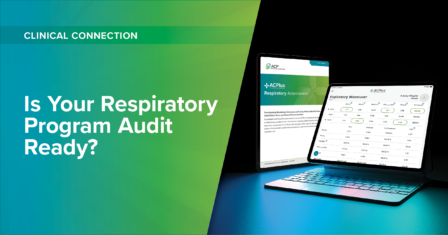
Meeting the standard for respiratory care documentation requires a reliable, standardized process that starts at admission and carries through every reassessment. That’s exactly what ACPlus® Respiratory Assessment (ARA) is built to deliver.

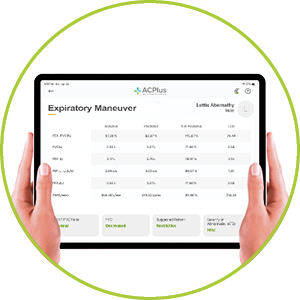
ARA is an innovative solution that enables skilled nursing operators to proactively identify patients with pulmonary dysfunction using objective, data-driven assessment. Using an iPad and Bluetooth spirometer, clinicians can conduct breathing tests at the bedside, capture baseline metrics, and receive automated suggestions for possible lung disease patterns and severity levels. This gives the care team the precise data needed to build an individualized treatment plan from day one.

ARA’s objective data provides the robust documentation required to justify respiratory care and support reimbursement, addressing one of the most consistent failure points auditors identify. And because ARA integrates seamlessly with PointClickCare and MatrixCare, results sync automatically at the point of service, helping to reduce documentation burden and ensuring nothing falls through the cracks.

Building Programs that Last

Respiratory therapy isn’t a reimbursement strategy. It’s a clinical service that, when delivered well, meaningfully improves patient outcomes and reduces hospitalizations. The providers who approach it that way — investing in training, standardizing processes, and capturing care accurately — are the ones best positioned to realize its full value.

MRK-BLOG-042

Respiratory therapy has become one of the most consequential clinical and financial pressure points in skilled nursing today. For providers operating under PDPM, it represents a genuine opportunity to capture reimbursement that reflects the true complexity of the patients they serve. It also represents one of the fastest-growing areas of audit exposure in the industry.

How OmniTour™ Supports Stronger Clinical Outcomes in Rehabilitation

How OmniTour™ Supports Stronger Clinical Outcomes in Rehabilitation

Before investing in a new therapy tool, the question that matters most to facilities is simple: Does it actually work?

For rehab teams, “working” means more than patients enjoying a session. It means measurable progress; patients who train harder, recover faster, and achieve their functional goals.

To better understand the impact of the OmniTour™ Virtual Exercise Experience on facility outcomes, we asked clinicians to share their experience, and the results were promising.

What Clinicians Reported

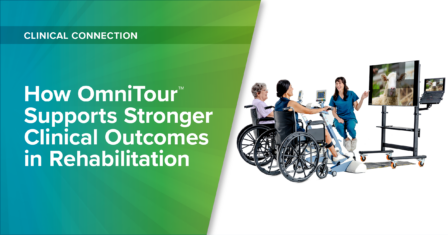
In a December 2025 survey of 25 OmniTour users, 92% of clinicians rated OmniTour as extremely or very effective at impacting outcomes in their facilities. When asked to identify which OmniTour benefits were most responsible for those outcome improvements, clinicians pointed to two factors above all others: patients training with greater effort and patients training more often.

Training effort and frequency are foundational to recovery, and OmniTour meaningfully supports both.

Effort + Frequency = Better Patient Outcomes

In rehabilitation, outcomes are largely dose-dependent. We know that patients who participate more frequently and push themselves harder during therapy sessions make greater functional gains. The challenge has always been sustaining that level of participation over time, especially in longer-term or post-acute settings where motivation often wanes.

When therapy becomes something patients look forward to, rather than something they endure, it changes the game. Patients don’t just show up; they engage. Over time, that engagement compounds into better clinical results.

Moving Beyond the Numbers

The survey data is compelling, but the qualitative feedback we received from clinicians paints a vivid picture of sustained engagement:

My long-term patients love it. They have started coming to the gym more often. It’s very helpful for long-term programming.

Another clinician shared that OmniTour has made a “significant impact” on overall patient satisfaction, a factor closely tied to adherence and overall recovery success.

The OmniTour Advantage

OmniTour isn’t designed to replace skilled clinical intervention, but it does enhance it. By giving patients a reason to train harder and return more consistently, it amplifies the work therapists are already doing. For rehab teams looking to get more out of every session, that kind of amplification has real clinical and operational value.

MRK-BLOG-041

Before investing in a new therapy tool, the question that matters most to facilities is simple: Does it actually work? For rehab teams, “working” means more than patients enjoying a session. It means measurable progress; patients who train harder, recover faster, and achieve their functional goals. To better understand the impact of the OmniTour™ Virtual Exercise Experience on facility outcomes, we asked clinicians to share their experience, and the results were promising.

Strengthening Fall Prevention & Regulatory Compliance in Skilled Nursing 

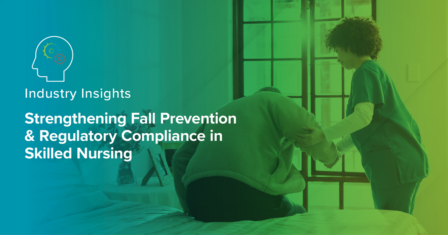
The regulatory landscape for skilled nursing facilities (SNFs) just changed and fall prevention is at the center of it. 

In January 2026, CMS made a landmark shift in how it selects facilities for its Special Focus Facility (SFF) program. For the first time, falls data is now a direct factor in whether a facility lands on that list. According to McKnight’s Long-Term Care News, compliance experts called the update “huge in many ways,” marking a significant departure from CMS’s previous reliance on staffing metrics. 

The timing isn’t coincidental. A September 2025 OIG report found that nursing homes fail to report 43% of major falls. CDC data published in 2025 showed that fall death rates among older adults rose more than 70% over the last two decades, with more than 41,000 older Americans dying from falls in 2023 alone. Falls now represent approximately one in every 56 deaths among adults 65 and older. 

For SNFs, the message from regulators is clear: fall prevention is no longer just a clinical priority. It is a compliance imperative

What the New CMS Rules Mean for SNFs

The SFF program targets nursing homes with significantly higher-than-average deficiencies and serious citations, particularly those showing a pattern of problems spanning three or more years. Up to 440 facilities can be under consideration at any one time. Under the new criteria, CMS is directing state survey agencies to weigh falls alongside survey scores when selecting candidates.

CMS also recently updated its definition of major falls and expanded MDS reporting requirements to include intercepted falls and falls from external forces. This means your facility’s reported fall numbers may rise, even without an increase in actual incidents, simply due to broader definitions and stricter documentation standards.

In short: facilities must now reduce actual falls, improve reporting accuracy, and document their prevention efforts comprehensively — all at once.

The Clinical Reality: Falls Are Difficult to Prevent Without a Structured Prevention Strategy

The statistics are sobering. A resident entering a skilled nursing facility has nearly a 50% chance of falling before their next birthday. For a 100-bed facility, that translates to an expected average of 170 falls per year. Falls in this population are driven by a complex interplay of factors: balance deficits, muscle weakness, medication side effects, cognitive impairment, environmental hazards, and reduced activity levels. 

What research consistently confirms is that single-intervention approaches don’t work. The evidence, endorsed by AOTAAPTA, and the National Council on Aging, points unambiguously to multifactorial, interdisciplinary programs as the standard of care for meaningful fall reduction. 

Outcomes That Differentiate Your Facility

Evidence-based fall prevention bundles consistently produce fall rate reductions of 15% to 57% in post-acute settings. ACP partner facilities have reported sustained improvements — not just in fall rates, but in patient confidence, therapy participation, and hospital readmission rates. Integrated PT and OT are directly linked to reduced readmissions, a metric that matters both clinically and financially under value-based care frameworks. 

ACP’s Fall Prevention Clinical Program 

ACP’s interdisciplinary Fall Prevention Program is designed to comprehensively address fall risk. ACP’s fall prevention program combines innovative rehabilitation technologies with customized clinical protocols and pathways, advanced therapist training, and ongoing support by ACP’s physical and occupational therapists. This fully integrated and highly customizable approach integrates electrotherapy with strength, balance, and functional mobility training to substantially reduce fall incidences, which improves patient outcomes and differentiates your facility in the community by leading to a better five-star quality rating. 

Access Live and On-Demand CE Courses on ACP University 

ACP University (ACPU), available to ACP partners, offers self-paced continuing education courses in fall prevention and more, giving staff the knowledge to act as true partners in safety. For clinicians and facilities seeking deeper expertise, ACPU also hosts the ACP Certified program, which provides in-depth certification training in key areas, including fall prevention, designed to enhance clinical skills, improve patient outcomes, and strengthen your facility’s credibility with referral sources. 

What Your Team Should Do Right Now 

Given the new CMS direction, compliance experts are urging facilities to take immediate steps: 

  1. Review your fall prevention program with your team — CMS is now looking at falls as a pattern-of-care issue. 
  2. Audit your fall reporting processes to close the documentation gap flagged by the OIG. Every fall, including intercepted falls under the new MDS definitions, must be accurately captured. 
  3. Train all staff on your falls program thoroughly enough that any team member can explain it to a surveyor. 
  4. Investigate every fall for specific, individualized interventions. Generic care plans will not hold up under increased scrutiny. 
  5. Partner with a proven rehabilitation solutions provider that can deliver the technology, protocols, and training your team needs to perform at a higher level. 

MRK-BLOG-040

In January 2026, CMS made a landmark shift in how it selects facilities for its Special Focus Facility (SFF) program. For the first time, falls data is now a direct factor in whether a facility lands on that list. For SNFs, the message from regulators is clear: fall prevention is no longer just a clinical priority. It is a compliance imperative. Our latest blog unpacks everything you need to know. 

Accelerating Wound Healing & Restoring Mobility

Accelerating Wound Healing & Restoring Mobility

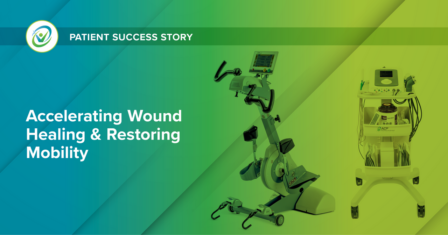
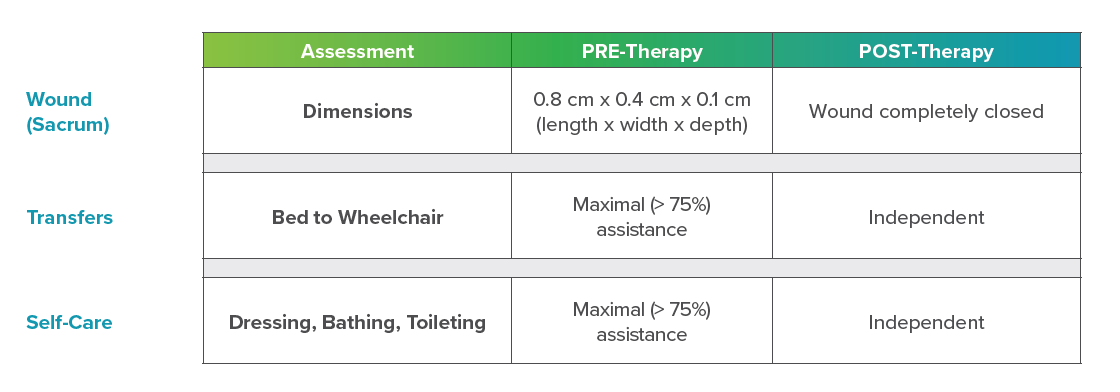
A 64-year-old long-term care resident was referred to therapy following an exacerbation of chronic heart failure that left her significantly weakened and with a marked decline in functional mobility. She lost her ability to independently propel her wheelchair and was also battling a non-healing, full-thickness pressure wound at the base of her spine, despite more than a month of standard wound care. To get her back on track, her care team turned to OmniVersa and OmniCycle.

Therapy Protocol

Speech Therapy

  • 3-5x/week x 12 weeks

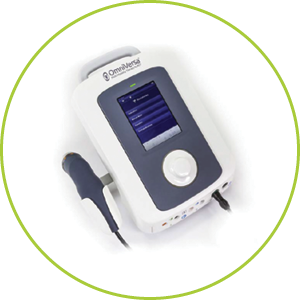
OmniVersa® Ultrasound/Electrotherapy System

  • Subthermal ultrasound over the wound bed to increase local circulation and facilitate wound healing

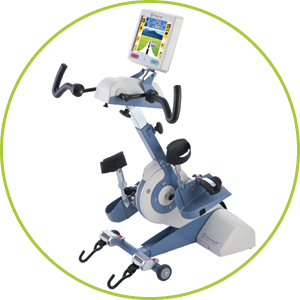
OmniCycle® Elite Therapeutic Exercise System

  • Upper and lower extremity cycling for improved strength and endurance  

Additional Interventions

  • Therapeutic exercise, self-care management, and wheelchair mobility training

OmniVersa® Ultrasound/Electrotherapy System

OmniVersa®

Ultrasound/Electrotherapy System

OmniCycle® Elite Therapeutic Exercise System

OmniCycle®

Elite Therapeutic Exercise System

Accelerating Wound Healing & Restoring Mobility

This patient was pleased with her progress in therapy. Since the wound has healed, she has regained independence with mobility and self-care. She is looking forward to relocating to Florida to be near her sister. 

MRK-BLOG-039

A 64-year-old long-term care resident was referred to therapy following an exacerbation of chronic heart failure that left her significantly weakened and with a marked decline in functional mobility. She lost her ability to independently propel her wheelchair and was also battling a non-healing, full-thickness pressure wound at the base of her spine, despite more than a month of standard wound care. To get her back on track, her care team turned to OmniVersa and OmniCycle.

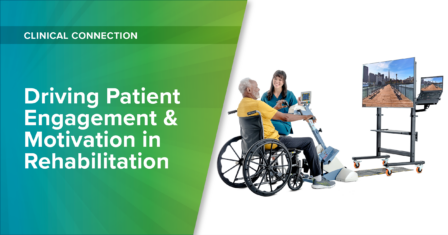
Driving Patient Engagement & Motivation in Rehabilitation

Driving Patient Engagement & Motivation in Rehabilitation 

For rehab clinicians, patient engagement is a common challenge that directly impacts outcomes. When patients participate actively and consistently in their therapy, they make measurable progress. When they don’t, their recovery can stall, or even halt.

While we can measure engagement through attendance and compliance, motivation, which drives engagement, is more difficult to define or influence. For many patients, traditional therapy approaches and repetitive activity fail to sustain their interest. This is where strategies that go beyond simply “showing up” have superior clinical value and outcomes.

Defining Patient Engagement 

True engagement in rehab includes: 

  • Active participation in therapy activities 
  • Emotional and cognitive involvement 
  • Consistency over time 
  • Willingness to exert effort 

A patient who shows up but performs only the minimum isn’t truly engaged with their therapy. Engagement is driven by the patient’s motivation, mood, and the value they see in the activity itself. When clinicians can identify what makes therapy meaningful or enjoyable, not just tolerable, patient engagement improves. That, in turn, supports better clinical outcomes. 

What Motivates Patients? 

ACP recently surveyed clinicians who incorporated the OmniTour™ Virtual Exercise Experience into their therapy programs. Their feedback shows that their patients aren’t just participating more; they’re showing up for therapy sessions with greater motivation and satisfaction:

  • 84% of clinicians rated OmniTour as very or extremely effective at increasing patient engagement in therapy.
  • 92% rated its impact on outcomes as extremely or very effective.
  • The top two most impactful OmniTour benefits affecting patient engagement were patient motivation and satisfaction.

Rather than seeing therapy as a chore, many patients in facilities using OmniTour looked forward to the virtual cycling sessions. They trained not just because it was prescribed, but because the experience made exercising feel fun and exciting.

One surveyed clinician shared this: 

Our residents love the OmniTour. They enjoy looking at all the fun places to visit.

Motivation as a Clinical Strategy 

Motivational tools like the OmniTour can’t replace skilled clinical intervention, but they can enhance it. Motivation supports existing clinical goals by: 

  • Increasing effort and consistency in therapy sessions 
  • Encouraging patients to remain engaged over longer periods 
  • Supporting mood improvements that can improve performance and adherence  
  • Providing clinicians with an additional tool to address barriers to participation 

When motivation is embedded in the therapy experience, clinicians can focus less on coaxing attendance and participation and more on advancing functional goals.

Practical Implications for Rehab Teams 

Motivation isn’t a “nice-to-have” in rehabilitation—it’s a clinical advantage. When motivation becomes part of the therapy experience, patients are more likely to participate actively, push themselves further, and remain consistent. 

By incorporating tools designed to support engagement, rehab teams can address one of the most persistent barriers to progress: sustaining meaningful participation over time. 

For rehab clinicians, patient engagement is a common challenge that directly impacts outcomes. When patients participate actively and consistently in their therapy, they make measurable progress. When they don’t, their recovery can stall, or even halt. While we can measure engagement through attendance and compliance, motivation, which drives engagement, is more difficult to define or influence.

MRK-BLOG-038

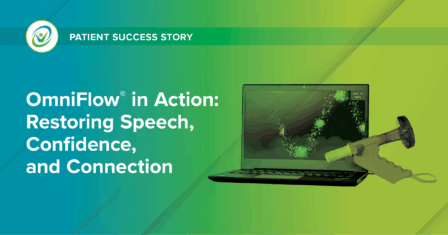
OmniFlow® in Action: Restoring Speech, Confidence, and Connection

OmniFlow® in Action: Restoring Speech, Confidence, and Connection 

After undergoing coronary artery bypass graft (CABG) surgery, a 78-year-old gentleman faced a difficult recovery that impacted his voice and speech. Multiple falls left him vulnerable, and his most recent fall resulted in a head injury that required hospitalization and a referral to a skilled nursing facility for rehabilitation. 

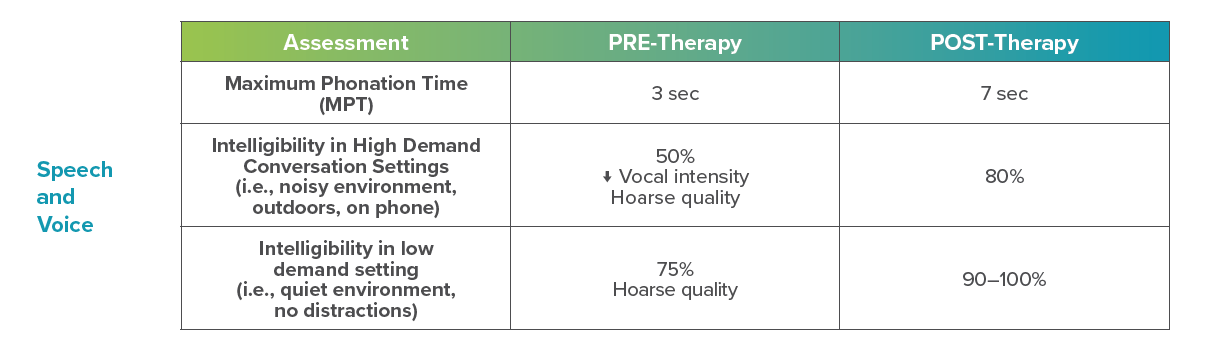
The patient expressed concerns that his voice and speech had changed after his fall, which was negatively impacting his ability to engage socially. Due to these concerns, he was evaluated by speech-language pathologists and referred to speech therapy.  

Therapy Protocol

Speech Therapy

  • 3x/week x 4 weeks

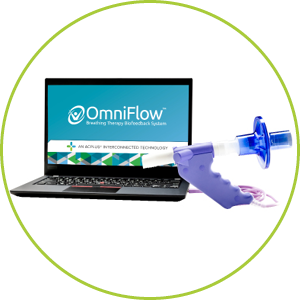
OmniFlow® Breathing Therapy Biofeedback System 

  • Controlled inspiratory lung volume – Diamond Mine
  • Forced expiratory lung volume – Prehistoric Contest

Patient Education 

  • Good vocal hygiene to improve vocal quality

OmniFlow®Breathing Therapy Biofeedback System

OmniFlow®

Breathing Therapy Biofeedback System

OmniFlow® in Action: Restoring Speech, Confidence, and Connection 

The patient and his significant other were happy that through therapy, he was able to regain his confidence and clarity of speech. The patient was able to engage in social activities he had avoided, such as talking on the phone, speaking around others at the rehab gym, and conversing with unfamiliar people.  

I found having the graphics and game-like aspect vs. numbers on a screen very useful and positive. I feel it was challenging to me and helped my lungs expand to help with my voice.

Patient

After a serious heart surgery and multiple falls, this 78-year-old patient found himself struggling not only with physical recovery but also with changes to his voice and speech that made social interactions difficult. In our latest blog post, we share how his care team used OmniFlow to help him regain his voice and confidence.

MRK-BLOG-033

Navigating CMS Changes: What Providers Need to Know for 2026

Navigating CMS Changes: What Providers Need to Know for 2026 

The healthcare landscape is shifting again, and providers in post-acute and outpatient therapy settings need to think ahead. We recently hosted a webinar with industry expert Ellen Strunk, President at Rehab Resources & Consulting. She broke down the latest updates from the Centers for Medicare & Medicaid Services (CMS) that will impact care delivery and reimbursement in 2026. 

Here are four essential takeaways: 

1. Value-Based Purchasing (VBP) Is Getting More Complex

CMS is refining how skilled nursing facilities (SNFs) are evaluated under the VBP program. Performance in 2025 will directly affect payments in fiscal year 2027. Key measures like discharge function scores, fall rates, and discharge-to-community rates are more important than ever. Plus, CMS is introducing a two-step appeal process for VBP results, giving providers more room to challenge decisions.

2. Health Equity Adjustment Is Being Removed

The Health Equity Adjustment (HEA) was adopted in 2024 and aimed to reward top-performing facilities serving higher proportions of residents with dual eligibility status. However, CMS found it had minimal impact on payment outcomes (less than 0.1%) and is now proposing to remove it for simplicity. This means providers will need to focus on core performance metrics without expecting equity-based bonuses.

3. New Payment Models Are on the Horizon

Two major models are in play: 

  • Ambulatory Specialty Care Model: Targets outpatient treatment for chronic heart failure and low back pain. It’s still in the proposal stage but could reshape outpatient therapy payments. This model aims to reduce avoidable hospitalizations and unnecessary procedures, improve patient experience and outcomes, and lower cost to Medicare.
  • TEAMS Model: Launching January 2026 and tracked for 5 performance years through December 31, 2030, this episodic care model covers five surgical conditions and tracks outcomes for 30 days post-discharge. SNFs with strong quality ratings may benefit from waived hospital stay requirements and closer hospital partnerships. This will enhance patient experience from surgery through recovery by supporting the coordination and transition of care between providers; promoting a successful recovery that can reduce avoidable hospital readmissions and emergency department visits.

4. Inpatient Only (IPO) List Is Being Phased Out

CMS is proposing to eliminate the inpatient only list over a three-year transition period, starting in 2026 with musculoskeletal services. Additional proposed removals from the IPO list include cardiovascular, lymphatic, digestive, gynecological, and endovascular procedures. This shift means more procedures could be done in outpatient settings, creating new opportunities—and challenges—for rehab providers to support faster recovery and transition planning.

Preparing for What’s Next

These changes reflect CMS’s push toward streamlined care, better outcomes, and stricter spending. Facilities should start preparing now to adapt their operations, track performance, and explore new partnerships. 

MRK-BLOG-031

The healthcare landscape is shifting again, and providers in post-acute and outpatient therapy settings need to think ahead. We recently hosted a webinar with industry expert Ellen Strunk, President at Rehab Resources & Consulting. She broke down the latest updates from the Centers for Medicare & Medicaid Services (CMS) that will impact care delivery and reimbursement in 2026. Keep reading for her key takeaways.

Reducing Fall Risk with Virtual Reality Exercise

Reducing Fall Risk with Virtual Reality Exercise 

This 71-year-old woman experienced nine falls in one week and a urinary tract infection (UTI) that resulted in a five-day hospitalization. Following her hospital stay, she required increased assistance with all functional tasks. Before this hospitalization, she lived with her grandchildren and was able to independently walk, navigate stairs, and complete all functional activities, including meal preparation.  

To restore her functional abilities, she was referred to a skilled nursing facility for rehabilitation services. 

Therapy Protocol

Physical & Occupational Therapy

  • 5x/week x 2 weeks

OmniVR® Virtual Rehabilitation System 

  • Transfer training using Bingo virtual reality (VR) exercise 
  • Balance and gait using City Walk VR exercise 

Additional Interventions 

  • Gait training, balance training, and therapeutic exercise 

OmniVR® Virtual Rehabilitation System 

OmniVR®

Virtual Reality Rehabilitation System

After only two weeks of physical and occupational therapy, this patient was able to sit-to-stand independently, stand longer, walk and use stairs, and significantly reduce her fall risk. 

Reducing Fall Risk with Virtual Reality Exercise 

This patient was very happy she progressed so quickly with therapy and that she was able to return home with her family’s support. Her therapists feel the OmniVR really helped improve her ability to get up from the chair and walk. 

I really like competing with the other patients on Bingo!

Patient

MRK-BLOG-029

This 71-year-old patient experienced nine falls within a week and a urinary tract infection that resulted in a five-day hospitalization. Following her hospital stay, she required increased assistance with all functional tasks. Before this hospitalization, she lived with her grandchildren and could independently walk, navigate stairs, and complete all functional activities, including meal preparation. To restore her functional abilities, she was referred to a skilled nursing facility for rehabilitation services. Learn how her care team used virtual reality exercise to regain her mobility.