
Tag: Senior Living

Managing Chronic Pain in Senior Living

Managing Chronic Pain in Senior Living

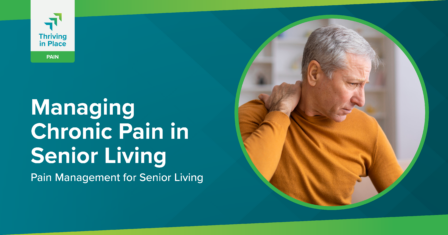
Chronic pain is common among older adults. Roughly one in five American adults lives with it, and the likelihood rises with age.1, 2 For wellness directors, it’s also one of the quieter threats to resident well-being. Left unmanaged, it can impact sleep, mood, appetite, and connection, the very things that make a community feel like home. 

The Cycle of Chronic Pain

Pain makes movement feel risky, so residents move less. Less movement leads to deconditioning, stiffness, and weakness, which makes pain worse. Meanwhile, the isolation, poor sleep, and low mood that come with persistent pain amplify how intensely that pain is felt. 

It’s a loop that worsens over time. Chronic pain has been linked to depression,1 and it’s a known contributor to social withdrawal, sleep disturbance, appetite loss, and cognitive decline. One unmanaged symptom quietly becomes several. To interrupt that loop, we can turn to movement and engagement.

How Movement Helps Break the Cycle

Leading clinical guidance favors conservative, non-pharmacological approaches as a first line for managing pain. Gentle, consistent activity offers dual benefits; it can ease pain directly while rebuilding the mobility, sleep, and mood that unmanaged pain erodes. A few kinds of activity are especially well suited to residents living with pain:

  • Gentle, low-impact cycling: Rhythmic movement can help reduce hip and knee pain and ease muscle tension. The endorphins that come with activity support better mood and sleep without the strain of higher-impact exercise. 
  • Immersive, engaging activities: Captivating experiences work partly through distraction. When attention is drawn into an activity, the perception of pain often eases. When those activities are social, they do added work against the isolation that pain drives. 
  • Guided breathing: Slow, rhythmical breathing taps the body’s relaxation response, easing the stress and physical tension that make pain feel sharper. 

What these activities have in common is that they meet residents where they are. Pain never has to be the reason someone opts out. The activity adjusts to the person, not the other way around. This is the thinking behind ACP’s wellness technologies; each designed around a different way movement and engagement can help residents feel and function better.

Making It Work 

The key to any pain management approach is consistency. It works when it’s woven into daily life and sustained over time, which is where having clinical guidance and a structured program makes the difference. That support is part of what an ACP subscription is built to provide. 

When pain is well managed, residents come back to the activity calendar, to the dining room, to the friendships and routines that keep them thriving.

MRK-BLOG-050

Chronic pain affects roughly 1 in 5 older adults, and left unmanaged, it can quietly erode sleep, mood, and connection — the things that make a community feel like home. Our latest blog breaks down the cycle of chronic pain and how gentle movement and engagement can help residents get back to the routines and relationships they love.
Preventing Falls, Preserving Independence: Fall Prevention for Senior Living

Preventing Falls, Preserving Independence: Fall Prevention for Senior Living 

For wellness directors in assisted and independent living, keeping residents active and engaged isn’t just a quality-of-life goal; it’s what keeps residents in your community. According to the CDC, one in four adults 65 and older falls each year, and falls are the leading cause of both fatal and nonfatal injury in that age group. And critically for AL/IL communities, fall injuries increase the risk of a resident transitioning to a higher level of care.

What Actually Moves the Needle

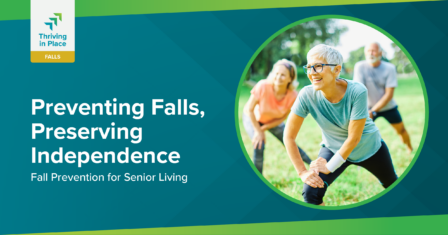
Many of the factors that put a resident at risk of falls, like muscle weakness, poor balance, and uncertain gait, are modifiable, and one of the most effective prevention strategies is regular, structured movement.

The evidence is consistent. A strength-and-balance program done at least three times a week measurably lowers fall risk, from foundational exercises like chair stands to balance work like Tai Chi. Pair that with resident education that helps residents recognize and talk about their own risk factors, and you have the two pillars of any effective fall prevention effort.

Why Generic Fall Prevention Falls Short

Most fall prevention efforts in senior living stop at posters, one-time workshops, or a checklist handed out at move-in. All are well-intentioned, but not enough. Reducing fall risk takes sustained attention, reassessing risk as it changes, keeping residents consistently engaged in movement, and equipping staff to reinforce it every day. That’s a program, not a pamphlet. Building one that holds up over time is where most communities run short.

Fall Prevention Built into Your Subscription

This is where a partnership with ACP can help. Our Fall Prevention programming is rooted in the same clinical framework we’ve refined over more than 20 years supporting skilled nursing and rehab facilities but built to support your residents as their needs evolve.

As part of a partnership with ACP, your team gets:

  • A Dedicated Wellness Expert: Your licensed WE leads consultative sessions to develop, launch, and adapt your fall prevention programming as residents’ needs change. This is ongoing support, not a one-time training. 
  • Evidence-Based Programming: Support balance, strength, and mobility through engaging, interactive activities designed to keep residents coming back. 
  • Effective Staff Education: Through ACP University’s on-demand courses and weekly webinars, your team gains the knowledge to reinforce fall prevention every day. 
  • Ongoing Assessment: Your Wellness Expert helps you measure program outcomes and quantify return on investment, so success with fall prevention is something you can show. 

What it Means for Your Community

A resident who feels steadier on their feet is a resident who stays active, stays social, and stays in place. For your team, that means fewer falls, fewer care transitions, and a wellness program you can point to with staff who are trained, residents who are informed, and outcomes you can measure.

MRK-BLOG-049

One in four adults 65+ falls each year, but the right strength-and-balance routine can change those odds. See what separates a fall prevention program that actually works from one that’s just a pamphlet.