Managing Chronic Pain in Senior Living
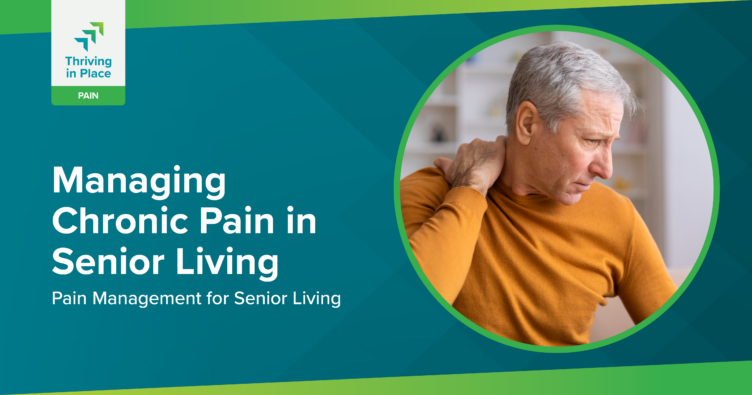
Chronic pain is common among older adults. Roughly one in five American adults lives with it, and the likelihood rises with age.1, 2 For wellness directors, it’s also one of the quieter threats to resident well-being. Left unmanaged, it can impact sleep, mood, appetite, and connection, the very things that make a community feel like home.
The Cycle of Chronic Pain
Pain makes movement feel risky, so residents move less. Less movement leads to deconditioning, stiffness, and weakness, which makes pain worse. Meanwhile, the isolation, poor sleep, and low mood that come with persistent pain amplify how intensely that pain is felt.
It’s a loop that worsens over time. Chronic pain has been linked to depression,1 and it’s a known contributor to social withdrawal, sleep disturbance, appetite loss, and cognitive decline. One unmanaged symptom quietly becomes several. To interrupt that loop, we can turn to movement and engagement.
How Movement Helps Break the Cycle
Leading clinical guidance favors conservative, non-pharmacological approaches as a first line for managing pain. Gentle, consistent activity offers dual benefits; it can ease pain directly while rebuilding the mobility, sleep, and mood that unmanaged pain erodes. A few kinds of activity are especially well suited to residents living with pain:
- Gentle, low-impact cycling: Rhythmic movement can help reduce hip and knee pain and ease muscle tension. The endorphins that come with activity support better mood and sleep without the strain of higher-impact exercise.
- Immersive, engaging activities: Captivating experiences work partly through distraction. When attention is drawn into an activity, the perception of pain often eases. When those activities are social, they do added work against the isolation that pain drives.
- Guided breathing: Slow, rhythmical breathing taps the body’s relaxation response, easing the stress and physical tension that make pain feel sharper.
What these activities have in common is that they meet residents where they are. Pain never has to be the reason someone opts out. The activity adjusts to the person, not the other way around. This is the thinking behind ACP’s wellness technologies; each designed around a different way movement and engagement can help residents feel and function better.
Making It Work
The key to any pain management approach is consistency. It works when it’s woven into daily life and sustained over time, which is where having clinical guidance and a structured program makes the difference. That support is part of what an ACP subscription is built to provide.
When pain is well managed, residents come back to the activity calendar, to the dining room, to the friendships and routines that keep them thriving.
Wellness Solutions for Active Aging
Discover how ACP’s Wellness Programs and technologies can support your community.
MRK-BLOG-050
Chronic pain affects roughly 1 in 5 older adults, and left unmanaged, it can quietly erode sleep, mood, and connection — the things that make a community feel like home. Our latest blog breaks down the cycle of chronic pain and how gentle movement and engagement can help residents get back to the routines and relationships they love.
Latest Updates
Subscribe to stay up-to-date on our latest posts.