Tag: fall prevention

Strengthening Fall Prevention & Regulatory Compliance in Skilled Nursing 

The regulatory landscape for skilled nursing facilities (SNFs) just changed and fall prevention is at the center of it. 

In January 2026, CMS made a landmark shift in how it selects facilities for its Special Focus Facility (SFF) program. For the first time, falls data is now a direct factor in whether a facility lands on that list. According to McKnight’s Long-Term Care News, compliance experts called the update “huge in many ways,” marking a significant departure from CMS’s previous reliance on staffing metrics. 

The timing isn’t coincidental. A September 2025 OIG report found that nursing homes fail to report 43% of major falls. CDC data published in 2025 showed that fall death rates among older adults rose more than 70% over the last two decades, with more than 41,000 older Americans dying from falls in 2023 alone. Falls now represent approximately one in every 56 deaths among adults 65 and older. 

For SNFs, the message from regulators is clear: fall prevention is no longer just a clinical priority. It is a compliance imperative

What the New CMS Rules Mean for SNFs

The SFF program targets nursing homes with significantly higher-than-average deficiencies and serious citations, particularly those showing a pattern of problems spanning three or more years. Up to 440 facilities can be under consideration at any one time. Under the new criteria, CMS is directing state survey agencies to weigh falls alongside survey scores when selecting candidates.

CMS also recently updated its definition of major falls and expanded MDS reporting requirements to include intercepted falls and falls from external forces. This means your facility’s reported fall numbers may rise, even without an increase in actual incidents, simply due to broader definitions and stricter documentation standards.

In short: facilities must now reduce actual falls, improve reporting accuracy, and document their prevention efforts comprehensively — all at once.

The Clinical Reality: Falls Are Difficult to Prevent Without a Structured Prevention Strategy

The statistics are sobering. A resident entering a skilled nursing facility has nearly a 50% chance of falling before their next birthday. For a 100-bed facility, that translates to an expected average of 170 falls per year. Falls in this population are driven by a complex interplay of factors: balance deficits, muscle weakness, medication side effects, cognitive impairment, environmental hazards, and reduced activity levels. 

What research consistently confirms is that single-intervention approaches don’t work. The evidence, endorsed by AOTAAPTA, and the National Council on Aging, points unambiguously to multifactorial, interdisciplinary programs as the standard of care for meaningful fall reduction. 

Outcomes That Differentiate Your Facility

Evidence-based fall prevention bundles consistently produce fall rate reductions of 15% to 57% in post-acute settings. ACP partner facilities have reported sustained improvements — not just in fall rates, but in patient confidence, therapy participation, and hospital readmission rates. Integrated PT and OT are directly linked to reduced readmissions, a metric that matters both clinically and financially under value-based care frameworks. 

ACP’s Fall Prevention Clinical Program 

ACP’s interdisciplinary Fall Prevention Program is designed to comprehensively address fall risk. ACP’s fall prevention program combines innovative rehabilitation technologies with customized clinical protocols and pathways, advanced therapist training, and ongoing support by ACP’s physical and occupational therapists. This fully integrated and highly customizable approach integrates electrotherapy with strength, balance, and functional mobility training to substantially reduce fall incidences, which improves patient outcomes and differentiates your facility in the community by leading to a better five-star quality rating. 

Access Live and On-Demand CE Courses on ACP University 

ACP University (ACPU), available to ACP partners, offers self-paced continuing education courses in fall prevention and more, giving staff the knowledge to act as true partners in safety. For clinicians and facilities seeking deeper expertise, ACPU also hosts the ACP Certified program, which provides in-depth certification training in key areas, including fall prevention, designed to enhance clinical skills, improve patient outcomes, and strengthen your facility’s credibility with referral sources. 

What Your Team Should Do Right Now 

Given the new CMS direction, compliance experts are urging facilities to take immediate steps: 

  1. Review your fall prevention program with your team — CMS is now looking at falls as a pattern-of-care issue. 
  2. Audit your fall reporting processes to close the documentation gap flagged by the OIG. Every fall, including intercepted falls under the new MDS definitions, must be accurately captured. 
  3. Train all staff on your falls program thoroughly enough that any team member can explain it to a surveyor. 
  4. Investigate every fall for specific, individualized interventions. Generic care plans will not hold up under increased scrutiny. 
  5. Partner with a proven rehabilitation solutions provider that can deliver the technology, protocols, and training your team needs to perform at a higher level. 

MRK-BLOG-040

In January 2026, CMS made a landmark shift in how it selects facilities for its Special Focus Facility (SFF) program. For the first time, falls data is now a direct factor in whether a facility lands on that list. For SNFs, the message from regulators is clear: fall prevention is no longer just a clinical priority. It is a compliance imperative. Our latest blog unpacks everything you need to know. 
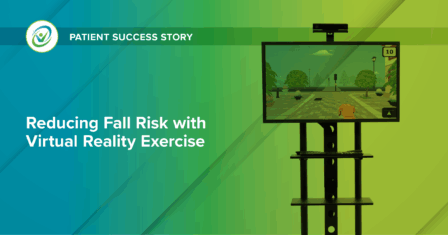
Reducing Fall Risk with Virtual Reality Exercise

Reducing Fall Risk with Virtual Reality Exercise 

This 71-year-old woman experienced nine falls in one week and a urinary tract infection (UTI) that resulted in a five-day hospitalization. Following her hospital stay, she required increased assistance with all functional tasks. Before this hospitalization, she lived with her grandchildren and was able to independently walk, navigate stairs, and complete all functional activities, including meal preparation.  

To restore her functional abilities, she was referred to a skilled nursing facility for rehabilitation services. 

Therapy Protocol

Physical & Occupational Therapy

  • 5x/week x 2 weeks

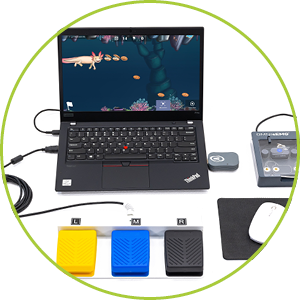
OmniVR® Virtual Rehabilitation System 

  • Transfer training using Bingo virtual reality (VR) exercise 
  • Balance and gait using City Walk VR exercise 

Additional Interventions 

  • Gait training, balance training, and therapeutic exercise 

OmniVR® Virtual Rehabilitation System 

OmniVR®

Virtual Reality Rehabilitation System

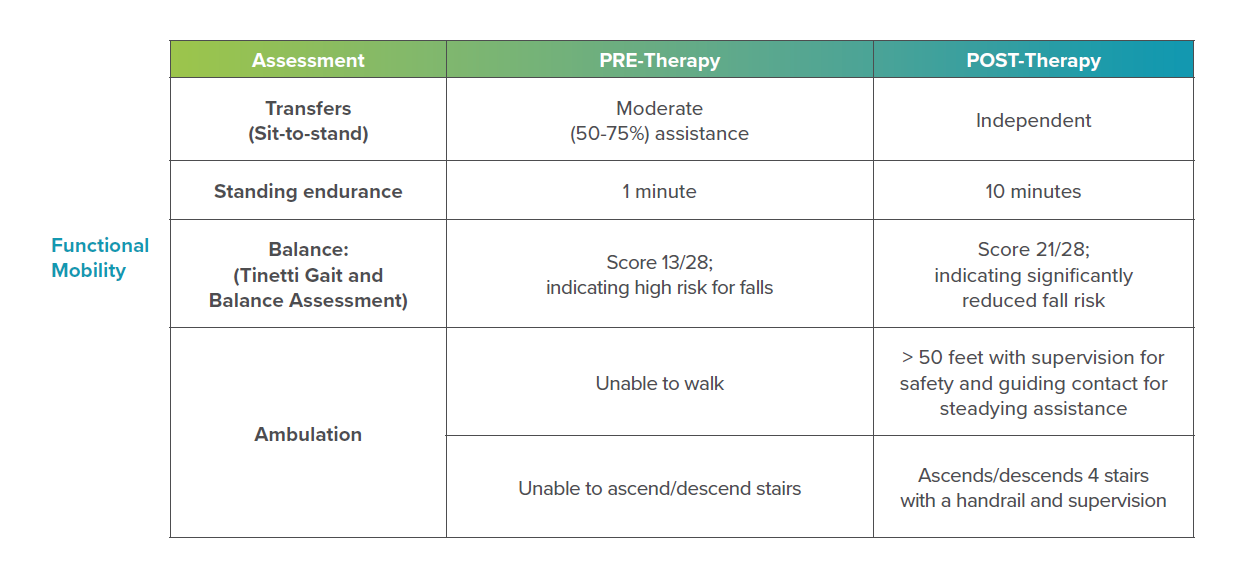
After only two weeks of physical and occupational therapy, this patient was able to sit-to-stand independently, stand longer, walk and use stairs, and significantly reduce her fall risk. 

Reducing Fall Risk with Virtual Reality Exercise 

This patient was very happy she progressed so quickly with therapy and that she was able to return home with her family’s support. Her therapists feel the OmniVR really helped improve her ability to get up from the chair and walk. 

I really like competing with the other patients on Bingo!

Patient

MRK-BLOG-029

This 71-year-old patient experienced nine falls within a week and a urinary tract infection that resulted in a five-day hospitalization. Following her hospital stay, she required increased assistance with all functional tasks. Before this hospitalization, she lived with her grandchildren and could independently walk, navigate stairs, and complete all functional activities, including meal preparation. To restore her functional abilities, she was referred to a skilled nursing facility for rehabilitation services. Learn how her care team used virtual reality exercise to regain her mobility.

Surge Rehabilitation and Nursing Pioneers ACP Facility Certification

Surge Rehabilitation and Nursing Pioneers ACP Facility Certification 

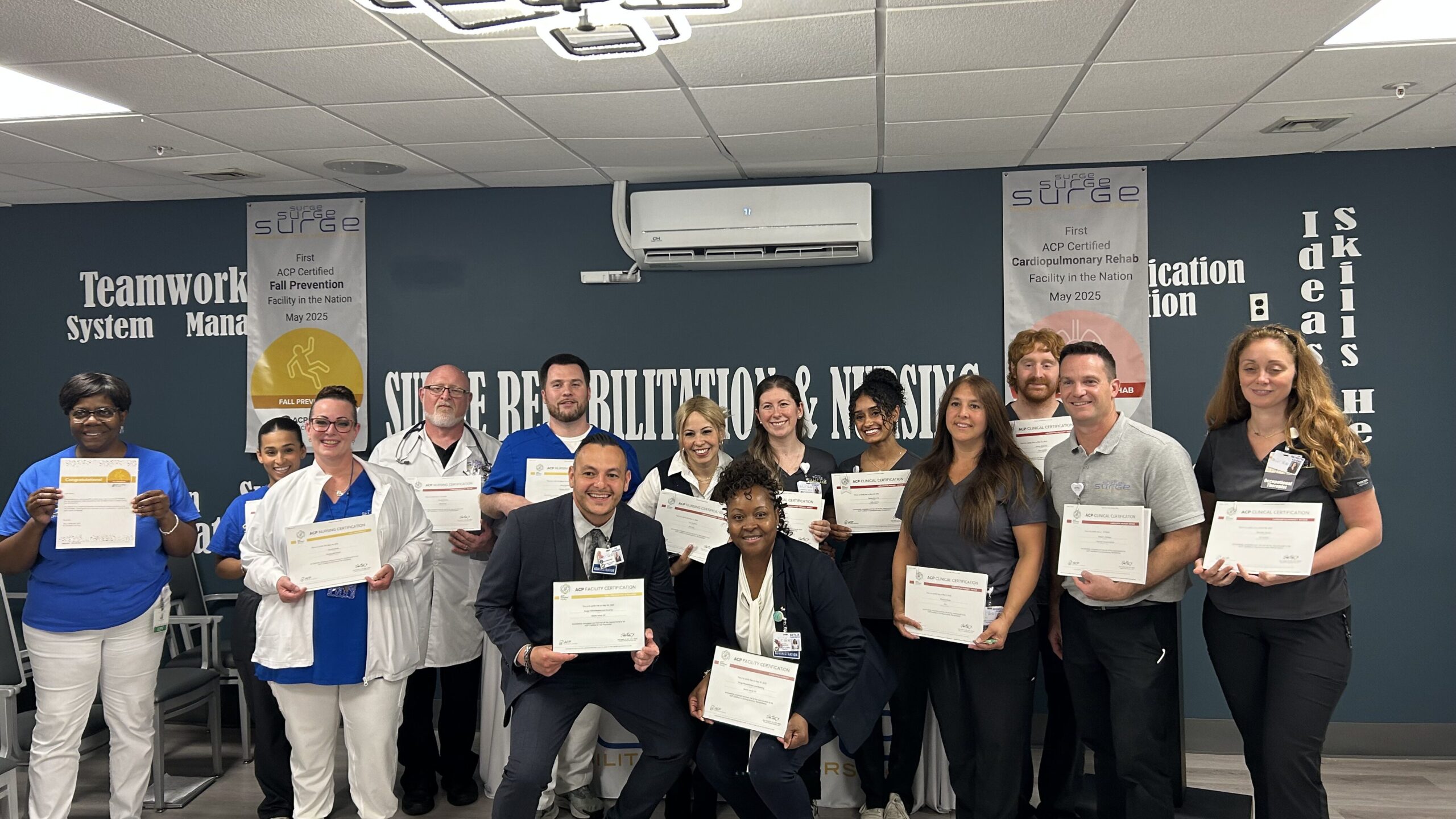
Last year, we launched the ACP Certified program to help our partners enhance their clinical expertise, improve patient outcomes, and stand apart in their communities. Since then, it has been our pleasure to see rehab and nursing clinicians across the country find value in becoming certified—for themselves and their patients. We are thrilled to share that Surge Rehabilitation and Nursing in Middle Island, NY, has become the first facility in the nation to achieve ACP Certification in both Cardiopulmonary Rehab and Fall Prevention. This remarkable achievement underscores Surge’s commitment to clinical excellence and innovation in post-acute care.

Elevating Cardiopulmonary Care 

To become ACP Certified in Cardiopulmonary Rehab, Surge’s staff demonstrated excellence in specialized therapy interventions and clinical protocols and in integrating advanced technology to support cardiopulmonary recovery and long-term management.

Following extensive training and the implementation of evidence-based practices, Surge reported the following improvements in patient outcomes:

  • 54% of patients required less supplemental oxygen by discharge
  • 84% of patients showed improvement in BORG score from admission to discharge, indicating reduced perceived breathlessness
  • Average increase in ambulation distance from admission to discharge was 93 feet, reflecting endurance and functional mobility gains
  • Average length of stay decreased from 52 days to 37 days, showing increased efficiency and care delivery
  • 93% of patients demonstrated improvement in Timed Up and Go (TUG) scores, indicating better functional mobility

“This certification is a milestone and affirmation of a promise to our residents and families that we deliver the highest level of cardiopulmonary care available today,” said Ahmed Joudah, Administrator of Surge Rehabilitation and Nursing.

Leading the Way in Fall Prevention

Falls are a significant risk for older adults, and Surge is taking a proactive, interdisciplinary approach to reduce risk and optimize clinical outcomes. Since implementing the evidence-based practices outlined in the Fall Prevention certification, the Surge team has achieved notable improvements: 

  • Average increase in ambulation distance of 56 feet from admission to discharge 
  • 81% of patients demonstrated improvement in TUG scores, and 30-second sit-to-stand scores improved by 5 repetitions, showing better functional mobility and reduced fall risk 

In their program reflection, they had this to share:  

“…participating in the ACP Fall Prevention Program has been a transformative journey for [their] interdisciplinary team, enhancing not only [their] clinical outcomes but also [their] communication, collaboration, and shared commitment to resident safety. One of the most critical elements that [they] have embraced is the importance of clear and consistent communication across all disciplines, ensuring that every team member – from therapists to nursing staff to physicians – is aligned on goals, strategies, and individual resident needs.”

Celebrating Clinical Excellence

As an ACP-certified facility, Surge continues to lead by example in clinical excellence, ongoing education, and interdisciplinary collaboration. This dual certification is not just a milestone for Surge but also ACP, and we are grateful for their exemplary partnership and dedication to better patient outcomes. 

It has been an incredible experience to witness the journey of ACP Certification, from its initial concept and development to its successful launch, culminating in the achievement of the first two facility certifications by Surge. The staff and administration at Surge are committed to ensuring the individuals under their care receive the best possible care, using all available resources to maximize clinical outcomes.

Kelly Contreras, Senior Manager, Remote Clinical Services

MRK-BLOG-027

Since launching the ACP Certified program, it has been our pleasure to see rehab and nursing clinicians nationwide find value in becoming certified. We are thrilled to share that Surge Rehabilitation and Nursing in Middle Island, NY, has become the first facility in the nation to achieve ACP Certification. Read on to learn how their Cardiopulmonary Rehab and Fall Prevention certifications are enhancing patient care.

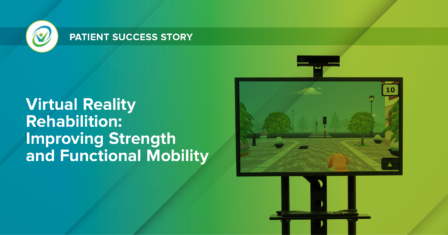
Virtual Reality Rehabilition: Improving Strength and Functional Mobility

Virtual Reality Rehabilition: Improving Strength and Functional Mobility 

While battling kidney cancer, this 72-year-old patient began experiencing weakness, foot drop, coordination deficits, and an unsteady gait. Before being referred to a skilled nursing facility for rehabilitation service, he lived at home with his wife, ambulated with a walker, and required some assistance with self-care.

Therapy Protocol

Physical & Occupational Therapy

  • 3-5x/week x 8 weeks

OmniVR® Virtual Rehabilitation System

  • Virtual reality exercise performed using Carnival, Bingo, and Picnic activities with progression in intensity and resistance to increase arm and leg strength

Additional Interventions

  • Training in transfers and gait; self-care management 

OmniVR®

Virtual Rehabilitation System

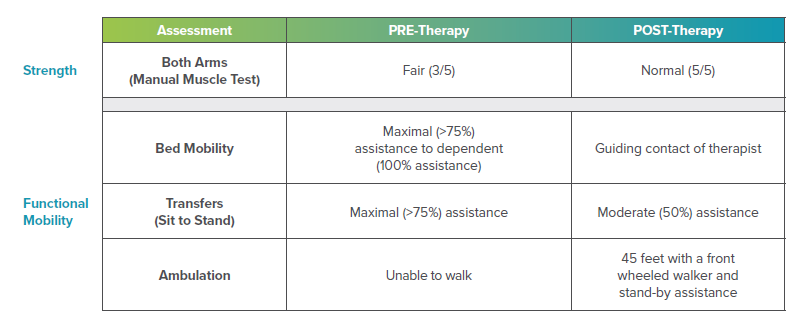
Following the 8-week rehabilitation program, enhanced with virtual reality, the patient demonstrated notable progress: 

Virtual Reality Rehabilition: Improving Strength and Functional Mobility

The patient’s therapist shared that he made significant progress in strength and functional mobility using OmniVR®’s virtual exercise activities, allowing him to achieve his goal of returning home with his wife!  

MRK-BLOG-022

While battling kidney cancer, this 72-year-old patient began experiencing weakness, foot drop, coordination deficits, and an unsteady gate. Before being referred to a skilled nursing facility for rehabilitation service, he lived at home with his wife, ambulated with a walker, and required some assistance with self-care. Find out how his therapy team used virtual reality rehabilitation to help get him home.