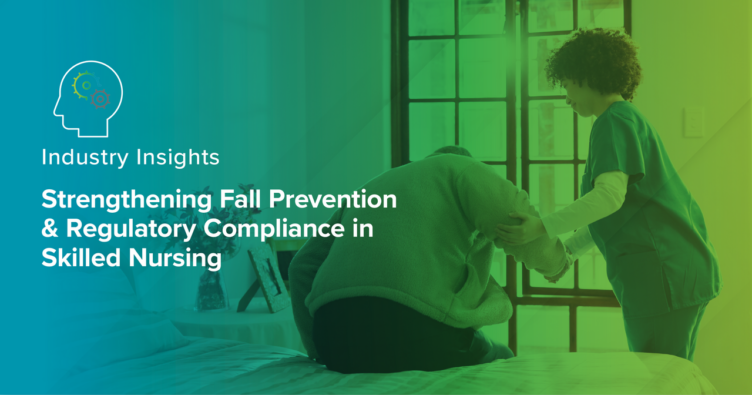
Strengthening Fall Prevention & Regulatory Compliance in Skilled Nursing
The regulatory landscape for skilled nursing facilities (SNFs) just changed and fall prevention is at the center of it.
In January 2026, CMS made a landmark shift in how it selects facilities for its Special Focus Facility (SFF) program. For the first time, falls data is now a direct factor in whether a facility lands on that list. According to McKnight’s Long-Term Care News, compliance experts called the update “huge in many ways,” marking a significant departure from CMS’s previous reliance on staffing metrics.
The timing isn’t coincidental. A September 2025 OIG report found that nursing homes fail to report 43% of major falls. CDC data published in 2025 showed that fall death rates among older adults rose more than 70% over the last two decades, with more than 41,000 older Americans dying from falls in 2023 alone. Falls now represent approximately one in every 56 deaths among adults 65 and older.
For SNFs, the message from regulators is clear: fall prevention is no longer just a clinical priority. It is a compliance imperative.
What the New CMS Rules Mean for SNFs
The SFF program targets nursing homes with significantly higher-than-average deficiencies and serious citations, particularly those showing a pattern of problems spanning three or more years. Up to 440 facilities can be under consideration at any one time. Under the new criteria, CMS is directing state survey agencies to weigh falls alongside survey scores when selecting candidates.
CMS also recently updated its definition of major falls and expanded MDS reporting requirements to include intercepted falls and falls from external forces. This means your facility’s reported fall numbers may rise, even without an increase in actual incidents, simply due to broader definitions and stricter documentation standards.
In short: facilities must now reduce actual falls, improve reporting accuracy, and document their prevention efforts comprehensively — all at once.
The Clinical Reality: Falls Are Difficult to Prevent Without a Structured Prevention Strategy
The statistics are sobering. A resident entering a skilled nursing facility has nearly a 50% chance of falling before their next birthday. For a 100-bed facility, that translates to an expected average of 170 falls per year. Falls in this population are driven by a complex interplay of factors: balance deficits, muscle weakness, medication side effects, cognitive impairment, environmental hazards, and reduced activity levels.
What research consistently confirms is that single-intervention approaches don’t work. The evidence, endorsed by AOTA, APTA, and the National Council on Aging, points unambiguously to multifactorial, interdisciplinary programs as the standard of care for meaningful fall reduction.
Outcomes That Differentiate Your Facility
Evidence-based fall prevention bundles consistently produce fall rate reductions of 15% to 57% in post-acute settings. ACP partner facilities have reported sustained improvements — not just in fall rates, but in patient confidence, therapy participation, and hospital readmission rates. Integrated PT and OT are directly linked to reduced readmissions, a metric that matters both clinically and financially under value-based care frameworks.
ACP’s Fall Prevention Clinical Program
ACP’s interdisciplinary Fall Prevention Program is designed to comprehensively address fall risk. ACP’s fall prevention program combines innovative rehabilitation technologies with customized clinical protocols and pathways, advanced therapist training, and ongoing support by ACP’s physical and occupational therapists. This fully integrated and highly customizable approach integrates electrotherapy with strength, balance, and functional mobility training to substantially reduce fall incidences, which improves patient outcomes and differentiates your facility in the community by leading to a better five-star quality rating.
Access Live and On-Demand CE Courses on ACP University
ACP University (ACPU), available to ACP partners, offers self-paced continuing education courses in fall prevention and more, giving staff the knowledge to act as true partners in safety. For clinicians and facilities seeking deeper expertise, ACPU also hosts the ACP Certified program, which provides in-depth certification training in key areas, including fall prevention, designed to enhance clinical skills, improve patient outcomes, and strengthen your facility’s credibility with referral sources.
What Your Team Should Do Right Now
Given the new CMS direction, compliance experts are urging facilities to take immediate steps:
- Review your fall prevention program with your team — CMS is now looking at falls as a pattern-of-care issue.
- Audit your fall reporting processes to close the documentation gap flagged by the OIG. Every fall, including intercepted falls under the new MDS definitions, must be accurately captured.
- Train all staff on your falls program thoroughly enough that any team member can explain it to a surveyor.
- Investigate every fall for specific, individualized interventions. Generic care plans will not hold up under increased scrutiny.
- Partner with a proven rehabilitation solutions provider that can deliver the technology, protocols, and training your team needs to perform at a higher level.
Enhance Your Fall Prevention Program
To learn more about how we can help your facility stay ahead of the regulatory curve, contact our team.
MRK-BLOG-040
In January 2026, CMS made a landmark shift in how it selects facilities for its Special Focus Facility (SFF) program. For the first time, falls data is now a direct factor in whether a facility lands on that list. For SNFs, the message from regulators is clear: fall prevention is no longer just a clinical priority. It is a compliance imperative. Our latest blog unpacks everything you need to know.
Latest Updates
Subscribe to stay up-to-date on our latest posts.