Reducing Dementia Risk Through Adaptive Cognitive Speed Training
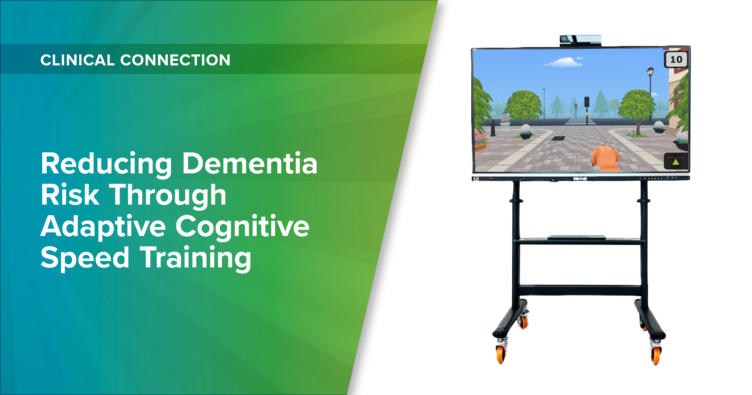
A twenty-year randomized controlled trial just produced the strongest evidence to date that cognitive training can reduce dementia risk, and what makes it work has direct implications for how assisted and independent living communities design resident programming.
The study1 is a follow-up analysis of the NIH-funded ACTIVE trial2, published in the journal Alzheimer’s & Dementia: Translational Research & Clinical Interventions and highlighted by Johns Hopkins Medicine. It found that a specific type of computer-based cognitive speed training was linked to a 25% reduction in dementia risk over a 20-year follow-up period.
What the ACTIVE Study Found
The ACTIVE (Advanced Cognitive Training for Independent and Vital Elderly) trial enrolled nearly 3,000 adults age 65 with no significant prior cognitive impairment. Participants were assigned to one of three cognitive training programs — speed, memory, or reasoning — or to a control group.
Of the three interventions, only speed training demonstrated a protective effect against dementia. Participants who completed up to 23 hours of speed training over three years, including booster sessions, had a 25% lower risk of a dementia diagnosis than the control group. Those who completed training without booster sessions did not see the same benefit.
Speed training was designed to teach the brain to process visual information more quickly and accurately. Participants were asked to identify objects on a screen rapidly and make decisions about them. Researchers believe this type of training engages broader neuronal networks and builds cognitive reserve — the brain’s accumulated resilience against the effects of dementia. Memory training and reasoning training did not show a statistically significant protective effect.
Three Features That Drove Results
The ACTIVE findings point to specific structural qualities that made speed training effective, and they’re worth noting when designing engagement programming for residents:
- Adaptability: The speed training program adjusted challenge level based on each participant’s performance. This individualized progression is what researchers flag as potentially central to its effectiveness.
- Visual and perceptual engagement: The training focused on processing speed and visual decision-making. Dr. Sanjula Singh, a physician-scientist and neurology instructor at Harvard Medical School, noted that visual processing speed training may engage neuronal networks that build broader brain resilience — what she described to NBC News as “cognitive reserve.”
- Sustained, consistent engagement: Participants who received booster sessions beyond initial training saw a 25% risk reduction. Duration and consistency were defining factors, not incidental ones.
What This Means for Your Community
For assisted and independent living communities, the priority is preserving cognitive health, not just responding to decline. The ACTIVE study reinforces that the structure of cognitive engagement matters. Activities that adapt to the individual, engage visual processing, and sustain participation over time produced measurable outcomes that other formats did not. That’s a meaningful benchmark when evaluating what belongs in your resident programming; not just what keeps residents busy, but what builds the kind of cognitive reserve the researchers identified as protective.
Bring VR Exercise to Your Residents this June
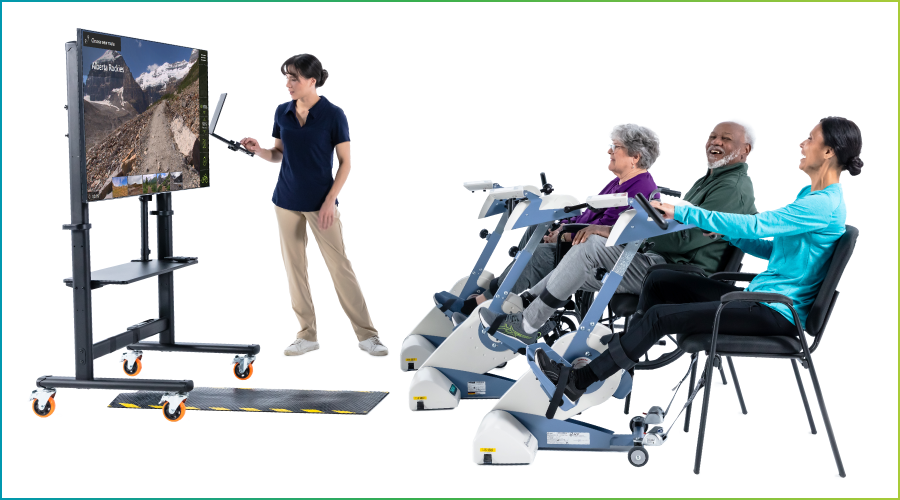
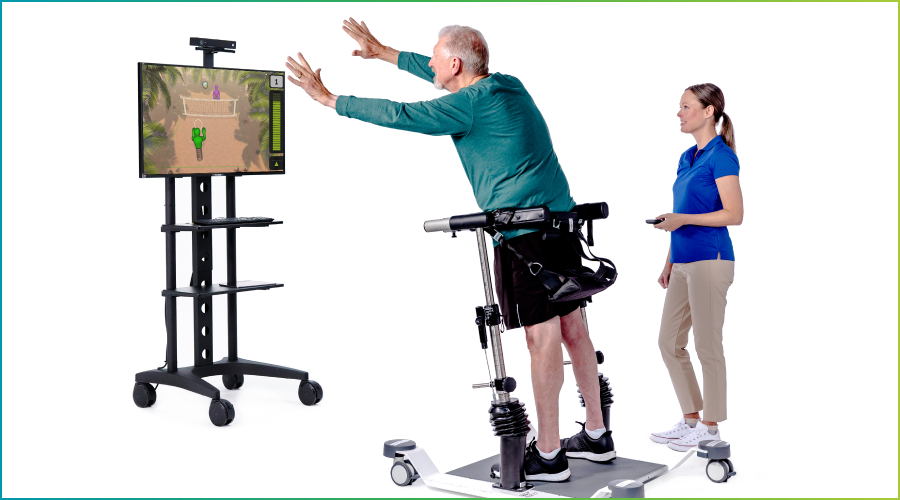
ACP’s OmniTour™ and OmniVR® were designed with these principles in mind. OmniTour immerses residents in virtual cycling experiences that drive movement, social connection, and daily engagement. OmniVR delivers interactive, game-like activities designed to support memory, balance, and cognitive function, with parameters adjustable to each resident’s individual needs.
Together, they give your team the foundation to build structured, adaptive programming that supports cognitive health over time.
Bundle & Save
In honor of Alzheimer’s & Brain Awareness Month, save 10% when you bundle OmniTour and OmniVR. This offer ends June 30, 2026.
- Coe, N. B., Miller, K. E. M., Sun, C., Taggert, E., Gross, A. L., Jones, R. N., Felix, C., Albert, M. S., Rebok, G. W., Marsiske, M., Ball, K. K., & Willis, S. L. (2026). Impact of cognitive training on claims-based diagnosed dementia over 20 years: evidence from the ACTIVE study. Alzheimer’s & dementia (New York, N. Y.), 12(1), e70197. https://doi.org/10.1002/trc2.70197
- Tennstedt, S. L., & Unverzagt, F. W. (2013). The ACTIVE study: study overview and major findings. Journal of aging and health, 25(8 Suppl), 3S–20S. https://doi.org/10.1177/0898264313518133
MRK-BLOG-046
A landmark 20-year study just produced the strongest evidence yet that cognitive training can reduce dementia risk by 25%, and what drove those results has real implications for how your community designs resident programming.
Latest Updates
Subscribe to stay up-to-date on our latest posts.