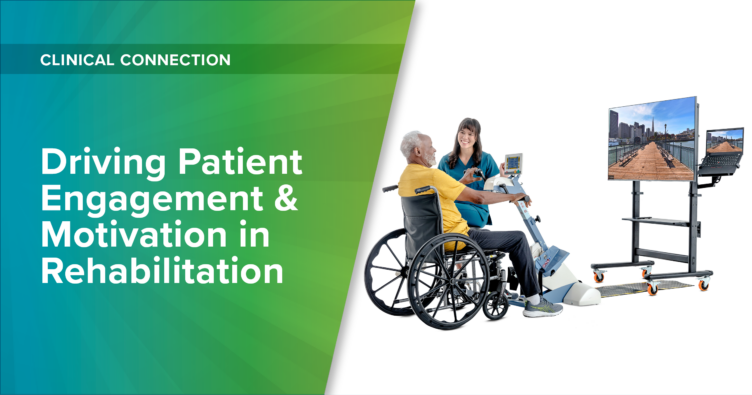
Driving Patient Engagement & Motivation in Rehabilitation
For rehab clinicians, patient engagement is a common challenge that directly impacts outcomes. When patients participate actively and consistently in their therapy, they make measurable progress. When they don’t, their recovery can stall, or even halt.
While we can measure engagement through attendance and compliance, motivation, which drives engagement, is more difficult to define or influence. For many patients, traditional therapy approaches and repetitive activity fail to sustain their interest. This is where strategies that go beyond simply “showing up” have superior clinical value and outcomes.
Defining Patient Engagement
True engagement in rehab includes:
- Active participation in therapy activities
- Emotional and cognitive involvement
- Consistency over time
- Willingness to exert effort
A patient who shows up but performs only the minimum isn’t truly engaged with their therapy. Engagement is driven by the patient’s motivation, mood, and the value they see in the activity itself. When clinicians can identify what makes therapy meaningful or enjoyable, not just tolerable, patient engagement improves. That, in turn, supports better clinical outcomes.
What Motivates Patients?
ACP recently surveyed clinicians who incorporated the OmniTour™ Virtual Exercise Experience into their therapy programs. Their feedback shows that their patients aren’t just participating more; they’re showing up for therapy sessions with greater motivation and satisfaction:
- 84% of clinicians rated OmniTour as very or extremely effective at increasing patient engagement in therapy.
- 92% rated its impact on outcomes as extremely or very effective.
- The top two most impactful OmniTour benefits affecting patient engagement were patient motivation and satisfaction.
Rather than seeing therapy as a chore, many patients in facilities using OmniTour looked forward to the virtual cycling sessions. They trained not just because it was prescribed, but because the experience made exercising feel fun and exciting.
One surveyed clinician shared this:
Our residents love the OmniTour. They enjoy looking at all the fun places to visit.
Motivation as a Clinical Strategy
Motivational tools like the OmniTour can’t replace skilled clinical intervention, but they can enhance it. Motivation supports existing clinical goals by:
- Increasing effort and consistency in therapy sessions
- Encouraging patients to remain engaged over longer periods
- Supporting mood improvements that can improve performance and adherence
- Providing clinicians with an additional tool to address barriers to participation
When motivation is embedded in the therapy experience, clinicians can focus less on coaxing attendance and participation and more on advancing functional goals.
Practical Implications for Rehab Teams
Motivation isn’t a “nice-to-have” in rehabilitation—it’s a clinical advantage. When motivation becomes part of the therapy experience, patients are more likely to participate actively, push themselves further, and remain consistent.
By incorporating tools designed to support engagement, rehab teams can address one of the most persistent barriers to progress: sustaining meaningful participation over time.
Bring OmniTour to Your Facility
Discover how OmniTour can support your therapy programs and support stronger patient outcomes.
For rehab clinicians, patient engagement is a common challenge that directly impacts outcomes. When patients participate actively and consistently in their therapy, they make measurable progress. When they don’t, their recovery can stall, or even halt. While we can measure engagement through attendance and compliance, motivation, which drives engagement, is more difficult to define or influence.
MRK-BLOG-038
Latest Updates
Subscribe to stay up-to-date on our latest posts.