Tag: Virtual Cycling

How OmniTour™ Supports Stronger Clinical Outcomes in Rehabilitation

How OmniTour™ Supports Stronger Clinical Outcomes in Rehabilitation

Before investing in a new therapy tool, the question that matters most to facilities is simple: Does it actually work?

For rehab teams, “working” means more than patients enjoying a session. It means measurable progress; patients who train harder, recover faster, and achieve their functional goals.

To better understand the impact of the OmniTour™ Virtual Exercise Experience on facility outcomes, we asked clinicians to share their experience, and the results were promising.
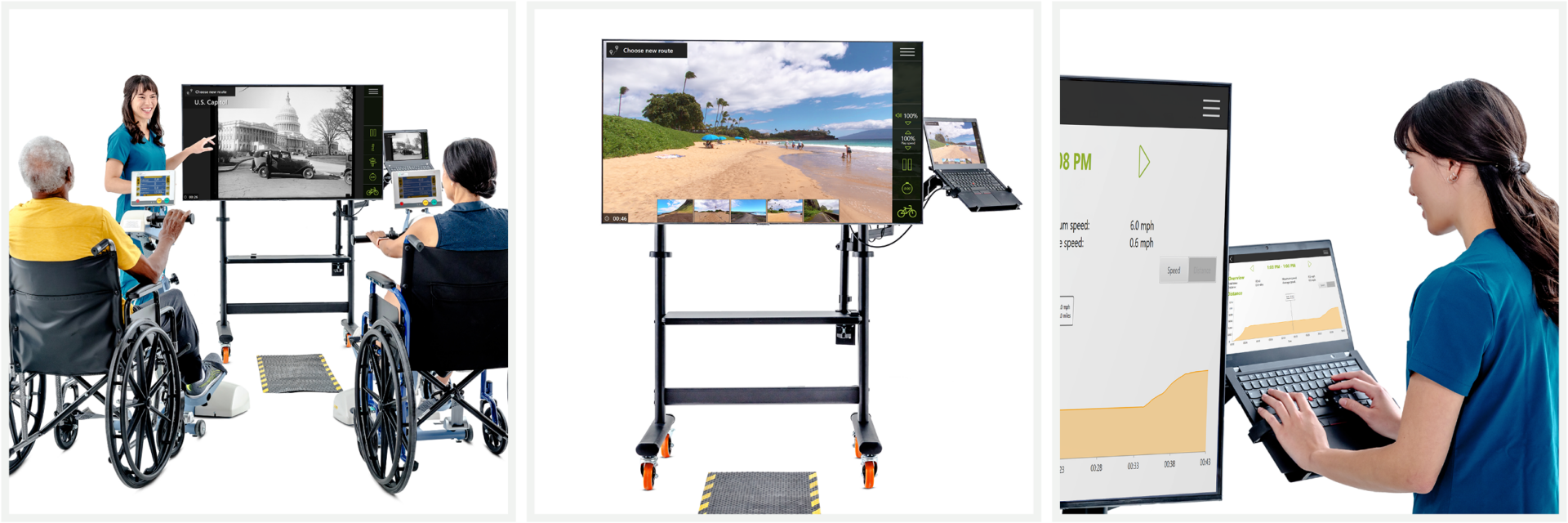
What Clinicians Reported

In a December 2025 survey of 25 OmniTour users, 92% of clinicians rated OmniTour as extremely or very effective at impacting outcomes in their facilities. When asked to identify which OmniTour benefits were most responsible for those outcome improvements, clinicians pointed to two factors above all others: patients training with greater effort and patients training more often.

Training effort and frequency are foundational to recovery, and OmniTour meaningfully supports both.

Effort + Frequency = Better Patient Outcomes

In rehabilitation, outcomes are largely dose-dependent. We know that patients who participate more frequently and push themselves harder during therapy sessions make greater functional gains. The challenge has always been sustaining that level of participation over time, especially in longer-term or post-acute settings where motivation often wanes.

When therapy becomes something patients look forward to, rather than something they endure, it changes the game. Patients don’t just show up; they engage. Over time, that engagement compounds into better clinical results.

Moving Beyond the Numbers

The survey data is compelling, but the qualitative feedback we received from clinicians paints a vivid picture of sustained engagement:

My long-term patients love it. They have started coming to the gym more often. It’s very helpful for long-term programming.

Another clinician shared that OmniTour has made a “significant impact” on overall patient satisfaction, a factor closely tied to adherence and overall recovery success.

The OmniTour Advantage

OmniTour isn’t designed to replace skilled clinical intervention, but it does enhance it. By giving patients a reason to train harder and return more consistently, it amplifies the work therapists are already doing. For rehab teams looking to get more out of every session, that kind of amplification has real clinical and operational value.

MRK-BLOG-041

Before investing in a new therapy tool, the question that matters most to facilities is simple: Does it actually work? For rehab teams, “working” means more than patients enjoying a session. It means measurable progress; patients who train harder, recover faster, and achieve their functional goals. To better understand the impact of the OmniTour™ Virtual Exercise Experience on facility outcomes, we asked clinicians to share their experience, and the results were promising.
Journey Beyond Recovery with the OmniTour™ Virtual Exercise Experience

Journey Beyond Recovery with the OmniTour™ Virtual Exercise Experience 

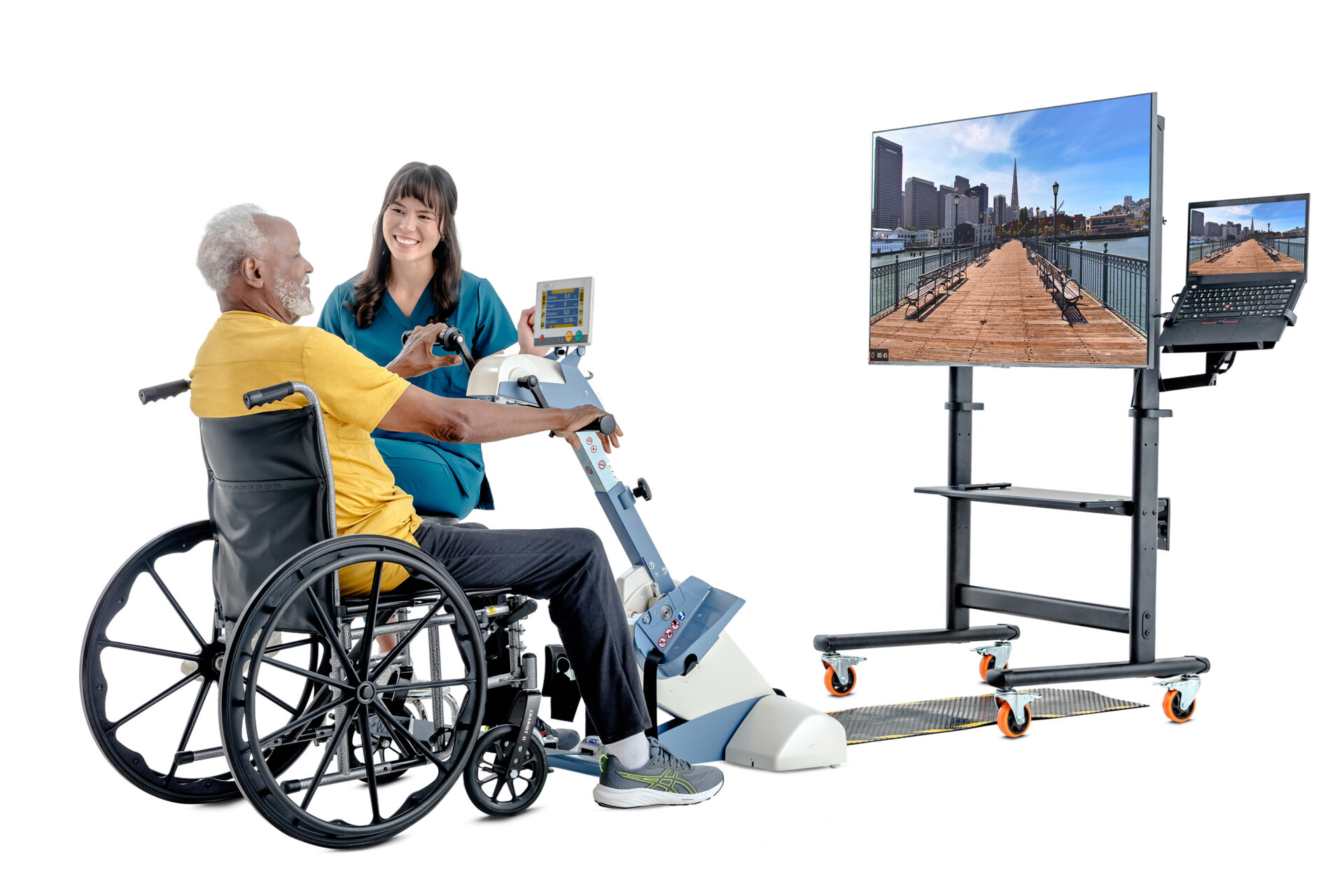
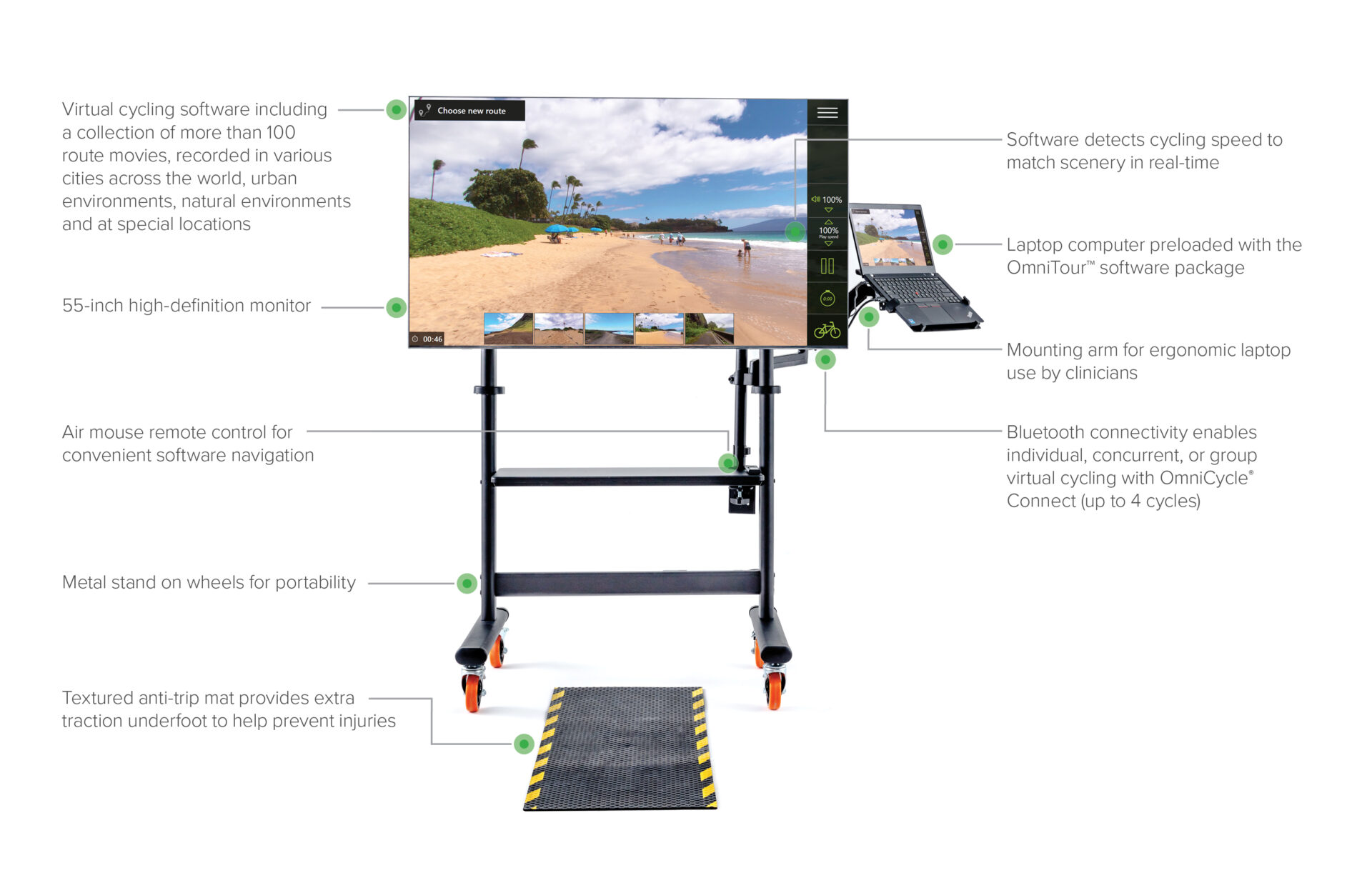
We are excited to announce the launch of our newest technology, the OmniTour™ Virtual Exercise Experience. OmniTour is an innovative virtual reality-based system that boosts patient engagement, improves outcomes, and optimizes care delivery through immersive cycling experiences. By seamlessly connecting with multiple OmniCycle® Connect devices, OmniTour enables group therapy options that make rehabilitation more fun, effective, and efficient. 

OmniTour Features & Benefits 

OmniTour leverages the powerful, immersive nature of virtual reality (VR) to deliver a better patient rehabilitation experience while helping clinicians optimize care delivery. Here are just a few of the key features that make it a game-changing addition to your rehab gym: 

  • Tour Movies: Patients can cycle through over 100 virtual routes across the world, from Amsterdam’s canals to the Grand Canyon, motivating them to train more often and with greater effort. 
  • Memory Lane: Patients can journey back in time with archival photos, cycling through cities from the 1930s to the 1990s. 
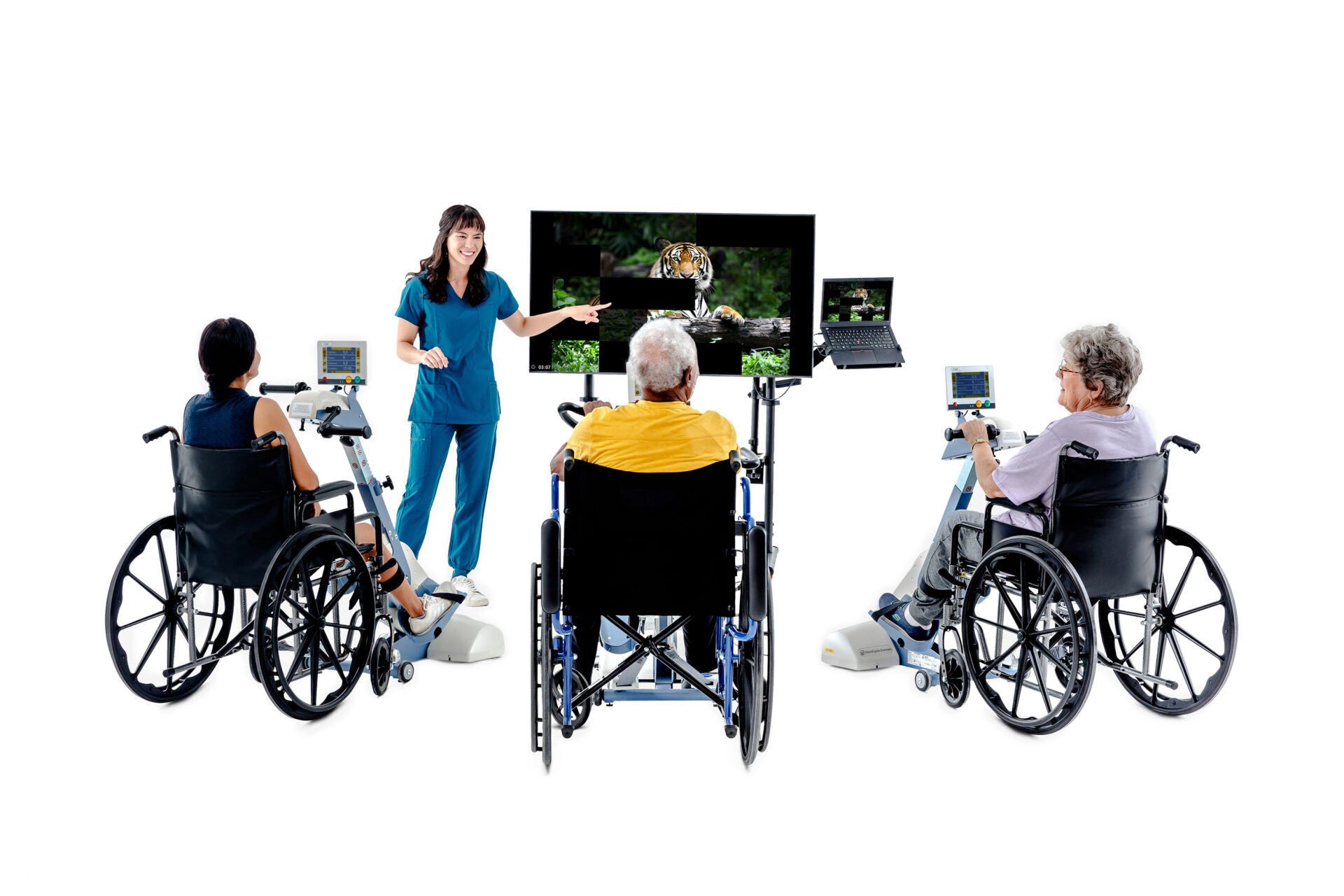
  • Photo Albums: Themed image libraries offer additional engagement options, including a “Guess the Picture” mode to challenge patients cognitively. 
  • Group Therapy Options: OmniTour connects with up to four OmniCycle Connect devices via Bluetooth, enabling group therapy sessions that improve care efficiency and encourage valuable patient socialization. 

Enhance the Patient Experience with Virtual Reality 

Incorporating VR into rehabilitation can deliver significant patient benefits: 

  • Increased patient engagement and motivation1 to participate in treatment 
  • Longer, harder, and more intense training sessions 
  • Enhanced mood and reduced apathy2 
  • Optimized treatment efficiency through more skilled time and opportunities for dual-task training 

Tap into the Benefits of Group Therapy 

OmniTour’s group therapy capabilities offer benefits to both patients and facilities: 

  • Improved patient self-care performance when paired with individual treatment3 
  • Increased patient satisfaction with their therapy sessions3 
  • Reduced feelings of isolation through socialization and connection 
  • Better engagement through healthy competition 
  • Optimized resources while maintaining high-quality care 
  • Enhanced real-world skill application through more complex training environments 

Upgrade Your Rehabilitation Program & Deliver Better Patient Outcomes with OmniTour 

OmniTour has the potential to help skilled nursing facilities tap into the power of virtual reality, provide more engaging interventions, and ultimately achieve better patient outcomes. By combining the physical benefits of cycling with the cognitive and emotional engagement of virtual experiences, OmniTour offers an exciting approach to rehabilitation that addresses the whole patient. 

  1. Kizmaz, E., Telli Atalay, O., Çetin, N., & Uğurlu, E. (2024). Virtual reality for COPD exacerbation: A randomized controlled trial. Respiratory Medicine, 230, 107696. https://doi.org/10.1016/j.rmed.2024.107696  ↩︎
  2. D’Cunha, N. M., Nguyen, D., Naumovski, N., McKune, A. J., Kellett, J., Georgousopoulou, E. N., Frost, J., & Isbel, S. (2019). A mini-review of virtual reality-based interventions to promote well-being for people living with dementia and mild cognitive impairment. Gerontology, 65(4), 430-440. https://doi.org/10.1159/000500040 ↩︎
  3. Luchynsky, M. K., Ashbaugh, K., Bowser, A., Campisi, E., Gleixner, M., Heinbach, B., & Snak, A. (2023). Efficacy of utilizing the group mode of treatment delivery in OT for skilled nursing facility settings. The American Journal of Occupational Therapy, 77(Supplement_2), 7711510267p1. https://doi.org/10.5014/ajot.2023.77S2-PO267 ↩︎

MRK-BLOG-012