Tag: speech therapy

OmniFlow® in Action: Restoring Speech, Confidence, and Connection

OmniFlow® in Action: Restoring Speech, Confidence, and Connection 

After undergoing coronary artery bypass graft (CABG) surgery, a 78-year-old gentleman faced a difficult recovery that impacted his voice and speech. Multiple falls left him vulnerable, and his most recent fall resulted in a head injury that required hospitalization and a referral to a skilled nursing facility for rehabilitation. 

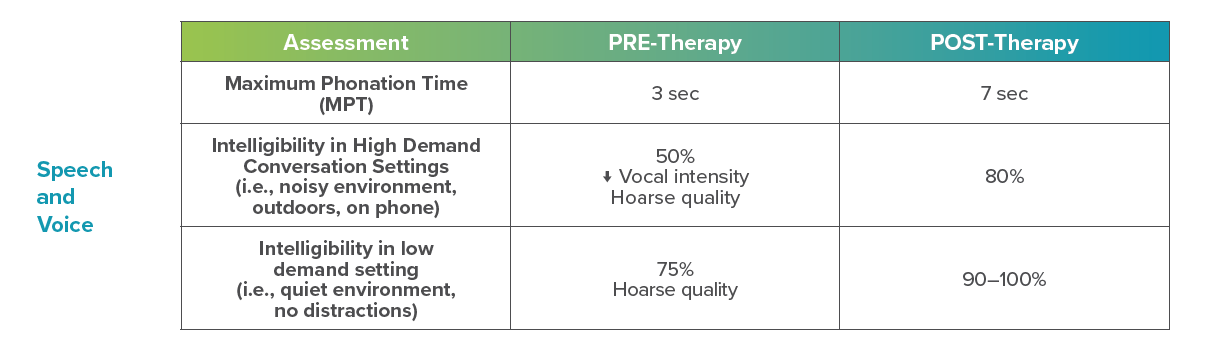
The patient expressed concerns that his voice and speech had changed after his fall, which was negatively impacting his ability to engage socially. Due to these concerns, he was evaluated by speech-language pathologists and referred to speech therapy.  

Therapy Protocol

Speech Therapy

  • 3x/week x 4 weeks

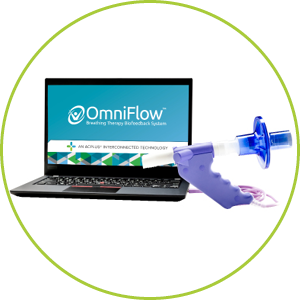
OmniFlow® Breathing Therapy Biofeedback System 

  • Controlled inspiratory lung volume – Diamond Mine
  • Forced expiratory lung volume – Prehistoric Contest

Patient Education 

  • Good vocal hygiene to improve vocal quality

OmniFlow®Breathing Therapy Biofeedback System

OmniFlow®

Breathing Therapy Biofeedback System

OmniFlow® in Action: Restoring Speech, Confidence, and Connection 

The patient and his significant other were happy that through therapy, he was able to regain his confidence and clarity of speech. The patient was able to engage in social activities he had avoided, such as talking on the phone, speaking around others at the rehab gym, and conversing with unfamiliar people.  

I found having the graphics and game-like aspect vs. numbers on a screen very useful and positive. I feel it was challenging to me and helped my lungs expand to help with my voice.

Patient

After a serious heart surgery and multiple falls, this 78-year-old patient found himself struggling not only with physical recovery but also with changes to his voice and speech that made social interactions difficult. In our latest blog post, we share how his care team used OmniFlow to help him regain his voice and confidence.

MRK-BLOG-033

Addressing Swallow Function with E-Stim and sEMG Biofeedback

Addressing Swallow Function with E-Stim and sEMG Biofeedback

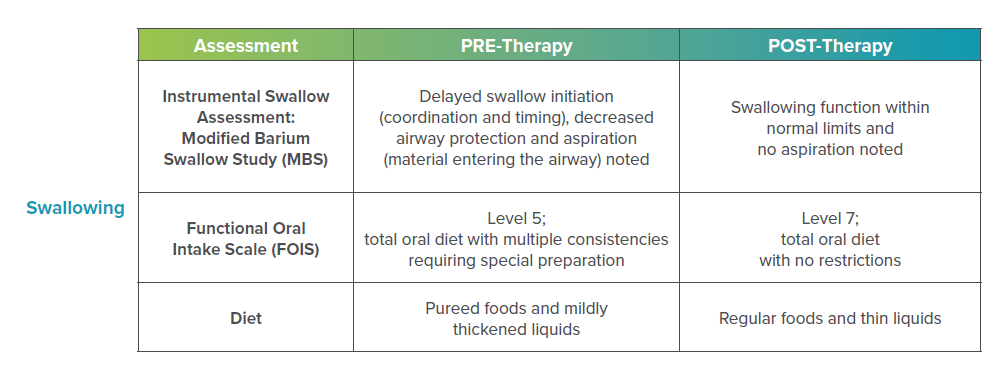
This 83-year-old patient was admitted to a skilled nursing facility following hospitalization for a bilateral hemisphere stroke (affecting both sides of the brain). As a result, he developed opharyngeal dysphagia (difficulty chewing and swallowing). He was placed on a modified diet and referred to speech-language pathology services to improve swallowing ability. Before his stroke, he lived alone, consumed a regular diet, and drank thin liquids. 

Therapy Protocol

Speech Therapy

  • 5x/week x 3 weeks

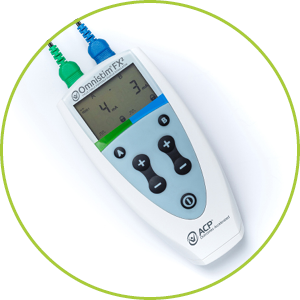
Omnistim® FX2 Portable PENS 

  • Patterned Electrical Neuromuscular Stimulation (PENS) head and neck protocol to improve the effectiveness of swallowing exercises 

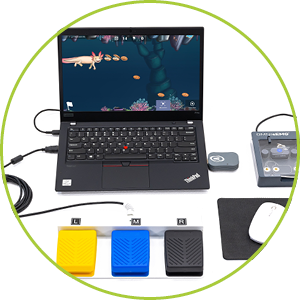
Synchrony Dysphagia Solutions by ACP®

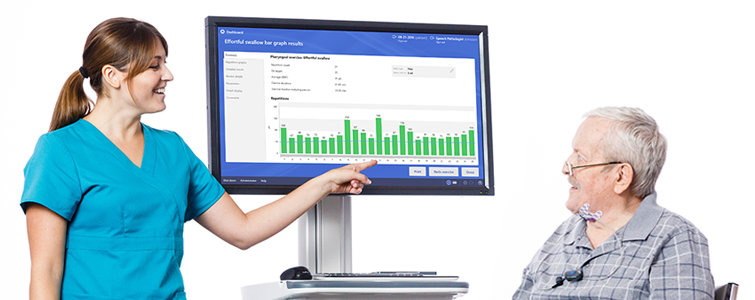
  • Effortful swallow exercise using Kangaroo virtual reality representation of muscle output to improve swallowing coordination and effort 

Additional Interventions

  • Patient education for swallowing strategies 

Omnistim® FX2 Portable PENS 

Omnistim® FX2

Portable PENS

Synchrony Dysphagia Solutions by ACP®

Synchrony

Dysphagia Solutions by ACP®

Addressing Swallow Function with E-Stim and sEMG Biofeedback

This patient went home to an assisted living facility and is very happy to have recovered his swallowing capabilities, enabling him to eat the food he loves with no restrictions! His speech-language pathologist credits the Synchrony Dysphagia Solutions System: 

Synchrony is a very effective tool that improved his swallow function.

Therapist

MRK-BLOG-026

After being hospitalized for a stroke, this patient had trouble chewing and swallowing. As a result, he was placed on a modified diet and referred to speech-language pathology services. Following three weeks of speech therapy, he was able to enjoy a regular diet and return home. Keep reading to find out how his care team did it.

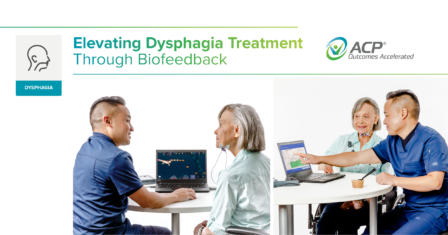
Elevating Dysphagia Treatment Through Biofeedback

The highlights:

  • Dysphagia has an outsized impact on older adults within nursing homes, with 75% experiencing some degree of dysphagia symptoms. 
  • Biofeedback could play a role in helping elevate dysphagia treatment. 
  • ACP’s Synchrony Dysphagia Solutions offers powerful sEMG biofeedback for effectively treating and managing dysphagia in older adults. 

June is National Dysphagia Awareness Month, a time to raise awareness around a swallowing disorder that impacts up to 33% of older adults and 75% of nursing home residents.1 Widely defined as “swallowing difficulties,” dysphagia is a serious condition that can increase the risk for other illnesses, malnutrition, and mortality. Despite the prevalence and impact of dysphagia, particularly among older adults, broader discussions have been happening around the need for standardization and unification around the definition, screening, assessment, diagnosis, treatment, and management of this common disorder. Biofeedback could play a role in helping elevate dysphagia treatment.   

Exploring the Benefits of Biofeedback in Dysphagia Care

Elevating Dysphagia Treatment Through Biofeedback

In conjunction with traditional Speech-Language Pathologist (SLP) therapy techniques such as diet modification, compensation strategies, and direct swallowing exercises, biofeedback provided by technologies like Synchrony Dysphagia Solutions becomes an asset in treating dysphagia in older adults. Using real-time data about swallowing function, clinicians can improve the effectiveness of treatment. 

Generally speaking, biofeedback in dysphagia treatment can help with: 

  1. Objective Measurement: Biofeedback can provide objective measurements of swallowing function, such as timing of swallow events, and coordination of swallow movements. This objective data can help SLPs track progress over time.
  2. Customized Therapy: With biofeedback, clinicians can better tailor dysphagia therapy to each patient’s specific needs. By identifying areas of swallowing impairment through instrumental assessments, SLPs can implement targeted exercises to improve swallowing strength and efficiency.
  3. Immediate Feedback: Real-time feedback during swallowing exercises enables patients to adjust their swallowing patterns in response to visual or auditory cues. This immediate feedback helps patients understand their swallowing function and learn to adapt accordingly.
  4. Motivation and Engagement: Biofeedback, especially when gamified through virtual reality, can enhance patient engagement in their therapy. Seeing improvements in swallowing function on a biofeedback display can be highly motivating for patients, encouraging them to continue with their therapy regimen.
  5. Standardized Protocols: Biofeedback can help standardize treatment protocols for dysphagia by providing a common framework for assessment and intervention. By using standardized measurement techniques and protocols, SLPs can ensure consistency in the evaluation and treatment of their patients with dysphagia. This ultimately enhances the quality of care provided to patients and promotes evidence-based practice in dysphagia management.

Leverage Biofeedback with Synchrony Dysphagia Solutions by ACP®

Designed specifically for SLPs and their patients, ACP’s Synchrony Dysphagia Solutions combines surface electromyography (sEMG) biofeedback and patterned electrical stimulation (PENS) with a virtual environment to engage patients in fun, interactive swallowing and speech exercises. It enables therapists and patients to visualize swallowing and speech activity with instant biofeedback that can help improve the accuracy and effectiveness of dysphagia treatment, drive behavioral changes, and lead to better patient outcomes.  

Synchrony

Dysphagia Solutions by ACP

  1. Thiyagalingam, S., Kulinski, A., Thorsteinsdottir, K., Shindelar, K., & Takahashi, P. (2021). Dysphagia in Older Adults. Thematic Review on Aging. Mayo Clinic Proceedings, 96(2), 488-497. Retrieved [2024, June 5] from https://www.mayoclinicproceedings.org/article/S0025-6196(20)30902-2/pdf  ↩︎

MRK-BLOG-006

June is National Dysphagia Awareness Month, a time to raise awareness around a swallowing disorder that impacts up to 33% of older adults and 75% of nursing home residents. Widely defined as “swallowing difficulties,” dysphagia is a serious condition that can increase the risk for other illnesses, malnutrition, and mortality. Despite the prevalence and impact of dysphagia, particularly among older adults, broader discussions have been happening around the need for standardization and unification around the definition, screening, assessment, diagnosis, treatment, and management of this common disorder. Learn how biofeedback could play a role in elevating dysphagia treatment.