Nutrition and Altered Diets in Dysphagia Therapy
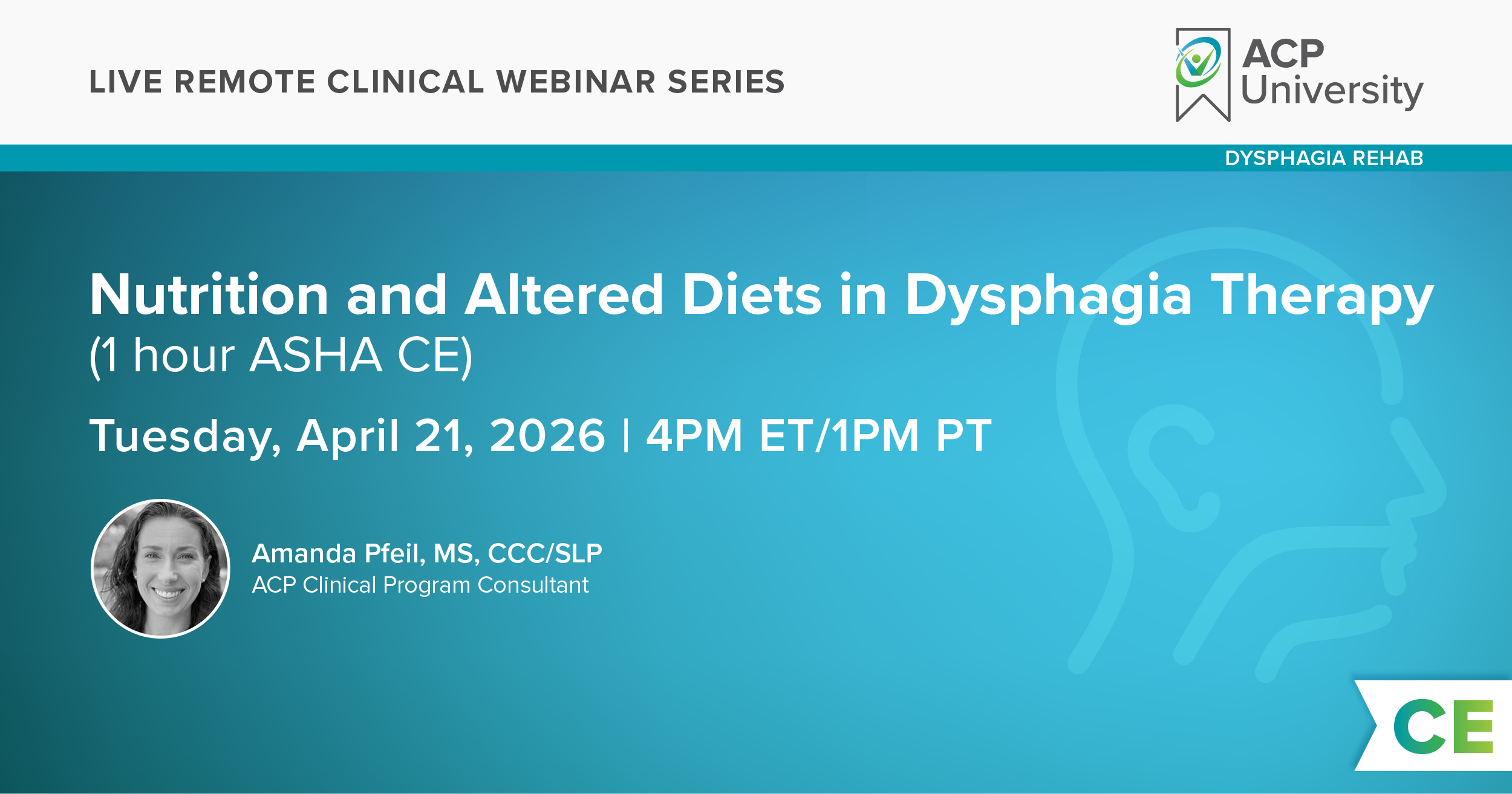
Date and Time
Location
Virtual Event
Enroll Now
Self-Enrollment for Existing ACPU Account Members
Click ‘Enroll’ below to register anytime prior to the course start time. For the best user experience on a smart device, please download the Adobe Learning Manager App.
If you don’t have an ACPU account, please reach out to your Clinical Program Consultant for your facility-specific learner link. If you don’t recall who your CPC is, reach out to us at [email protected].
About this course:
This intermediate level course offered via National Webinar Series presents an overview of concepts regarding how altered diets may impact nutrition and overall health. The course reviews possible negative consequences to altered diets, physical consequences of malnutrition and diet-based interventions to achieve the most optimal nutrition and hydration outcomes.
Instructor:

Request Enrollment by ACP
You may also use this form to enroll in multiple courses. Requests must be received 24 hours prior to the course’s scheduled start.
Related Events
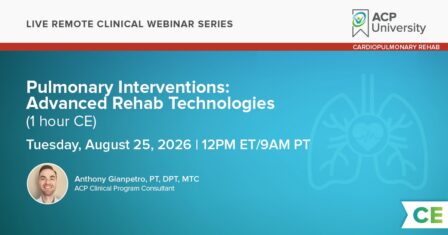
August 25, 2026
Pulmonary Interventions - Advanced Rehab Technologies
Cardiopulmonary disease can affect all aspects of health and quality of life, including functional mobility and ADLs/IADLs. Advanced rehab technologies and exercise can be incorporated into pulmonary rehabilitation to optimize patient outcomes. This one-hour intermediate level course for PT/PTAs and OT/OTAs is part of a series of Accelerated Clinical Practice courses. Through instruction and lab, this course provides information on how to incorporate electrical stimulation, ergometry/cycling, virtual reality, and dynamic standing balance systems into exercise within an evidence-based pulmonary rehabilitation program.
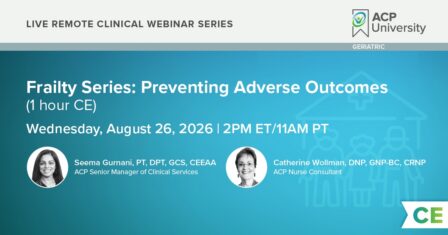
August 26, 2026
Frailty Series - Preventing Adverse Outcomes
This course provides an overview of available interdisciplinary team (IDT) best practice to improve quality of care and prevent adverse outcomes for frail older adults. IDT approaches include comprehensive geriatric assessment, evidence-based practice and best practice tools, expanded rehab services, strong communication among IDT members, and resident and caregiver education. Clinicians should be aware of unique patient goals in order to integrate timely palliative and hospice care as well as a comprehensive plan for transitions of care.