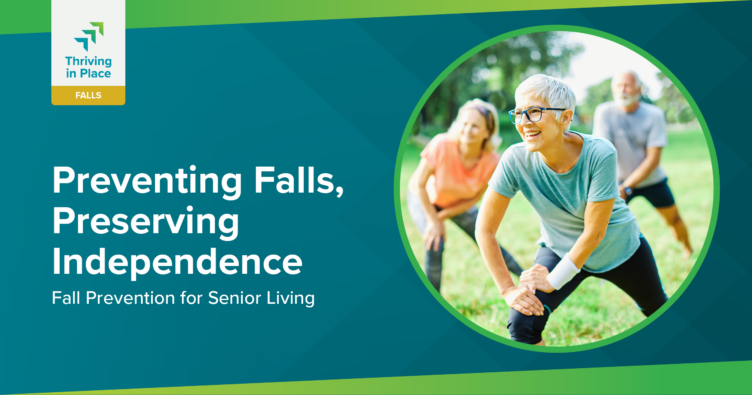
Preventing Falls, Preserving Independence: Fall Prevention for Senior Living
For wellness directors in assisted and independent living, keeping residents active and engaged isn’t just a quality-of-life goal; it’s what keeps residents in your community. According to the CDC, one in four adults 65 and older falls each year, and falls are the leading cause of both fatal and nonfatal injury in that age group. And critically for AL/IL communities, fall injuries increase the risk of a resident transitioning to a higher level of care.
What Actually Moves the Needle
Many of the factors that put a resident at risk of falls, like muscle weakness, poor balance, and uncertain gait, are modifiable, and one of the most effective prevention strategies is regular, structured movement.
The evidence is consistent. A strength-and-balance program done at least three times a week measurably lowers fall risk, from foundational exercises like chair stands to balance work like Tai Chi. Pair that with resident education that helps residents recognize and talk about their own risk factors, and you have the two pillars of any effective fall prevention effort.
Why Generic Fall Prevention Falls Short
Most fall prevention efforts in senior living stop at posters, one-time workshops, or a checklist handed out at move-in. All are well-intentioned, but not enough. Reducing fall risk takes sustained attention, reassessing risk as it changes, keeping residents consistently engaged in movement, and equipping staff to reinforce it every day. That’s a program, not a pamphlet. Building one that holds up over time is where most communities run short.
Fall Prevention Built into Your Subscription
This is where a partnership with ACP can help. Our Fall Prevention programming is rooted in the same clinical framework we’ve refined over more than 20 years supporting skilled nursing and rehab facilities but built to support your residents as their needs evolve.
As part of a partnership with ACP, your team gets:
- A Dedicated Wellness Expert: Your licensed WE leads consultative sessions to develop, launch, and adapt your fall prevention programming as residents’ needs change. This is ongoing support, not a one-time training.
- Evidence-Based Programming: Support balance, strength, and mobility through engaging, interactive activities designed to keep residents coming back.
- Effective Staff Education: Through ACP University’s on-demand courses and weekly webinars, your team gains the knowledge to reinforce fall prevention every day.
- Ongoing Assessment: Your Wellness Expert helps you measure program outcomes and quantify return on investment, so success with fall prevention is something you can show.
What it Means for Your Community
A resident who feels steadier on their feet is a resident who stays active, stays social, and stays in place. For your team, that means fewer falls, fewer care transitions, and a wellness program you can point to with staff who are trained, residents who are informed, and outcomes you can measure.
Expert Guided Programming for Whole Resident Health
Find out how ACP’s Wellness Programs can support your community’s goals.
MRK-BLOG-049
One in four adults 65+ falls each year, but the right strength-and-balance routine can change those odds. See what separates a fall prevention program that actually works from one that’s just a pamphlet.
Latest Updates
Subscribe to stay up-to-date on our latest posts.